.svg%20(1).png)


Key Takeways
- Smishing prevention is essential to protect SMS delivery rates and maintain customer trust.
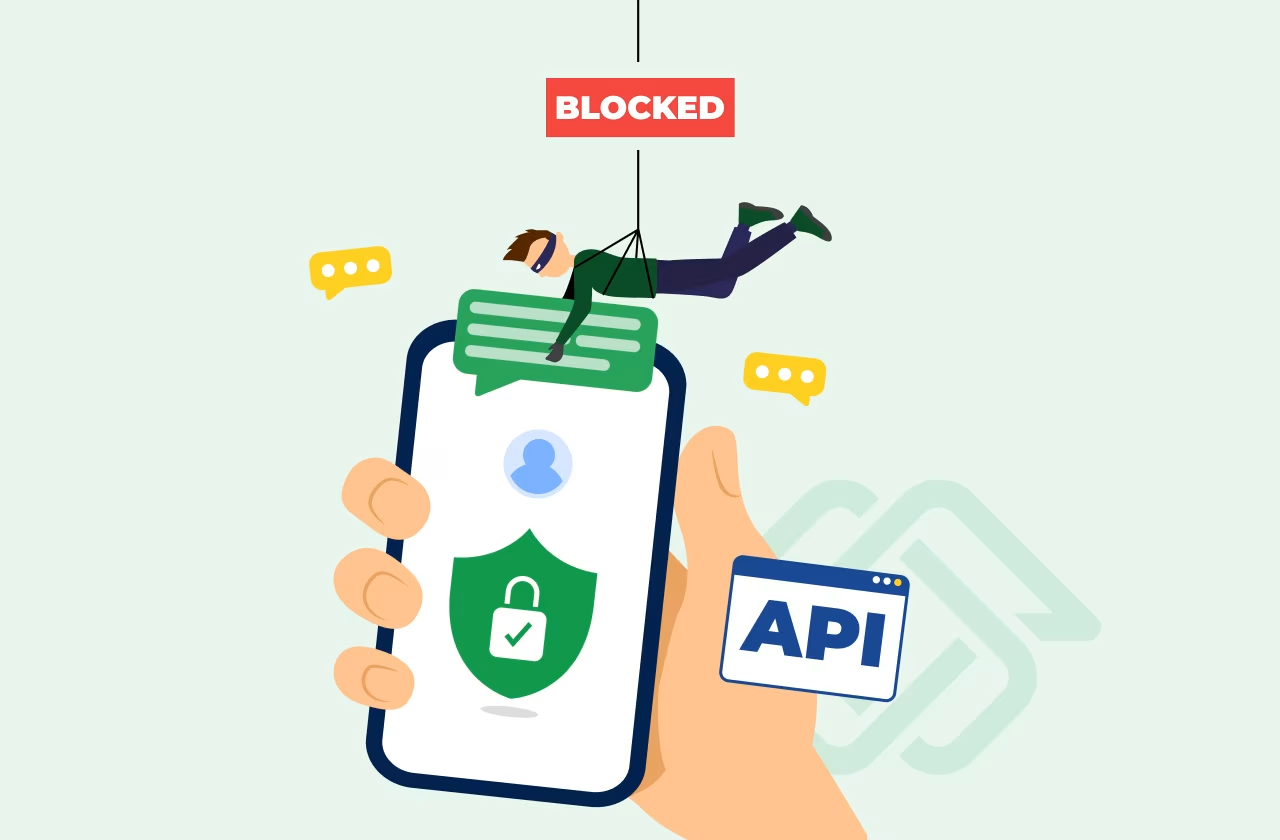
- Choosing a secure SMS API provider with direct carrier connections improves deliverability and reduces fraud risk.
- Compliance with regulations like 10DLC and DLT ensures your messages bypass carrier filters and reach users.
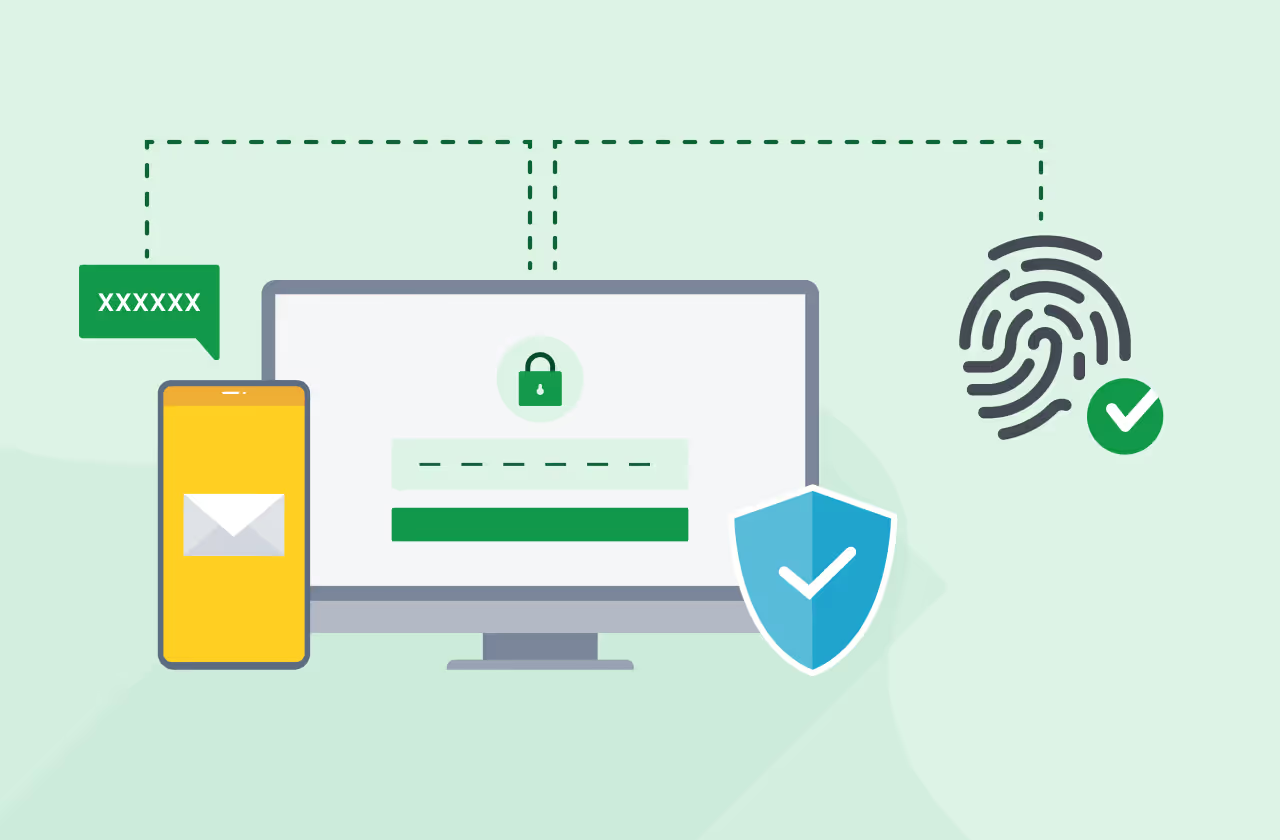
- Smart routing and real-time delivery tracking help businesses detect issues early and guarantee timely OTP delivery.
- Educating customers about smishing strengthens security and boosts engagement with legitimate SMS campaigns.
Why Anti-Smishing Matters More Than Ever
If you’ve been using SMS to talk to your customers, you already know it’s one of the fastest, most personal ways to get a message across. An OTP lands in seconds. A delivery update reaches people no matter where they are. A flash sale alert can bring in sales within minutes.
But there’s a growing problem in the middle of all this convenience: smishing. It’s the sneaky cousin of phishing that happens over SMS. Fraudsters send fake messages pretending to be banks, delivery services, or even your own company, trying to trick people into giving away sensitive info. Not only does this put customers at risk, it can also hurt your delivery rates if carriers start flagging your legitimate messages as suspicious.
And here’s the thing: even if you’re doing everything right, smishing scams in the ecosystem can still make it harder for your messages to get through. Carriers and regulators are tightening filters. Businesses are under more pressure to prove that their SMS traffic is clean and compliant.
That’s why it’s not enough to just “send” messages anymore. You need to make sure they’re secure, trusted, and delivered on time, every time. In this guide, we’ll walk through what smishing is, why it affects delivery, and what you can do to keep your campaigns safe while keeping your delivery rates high.
What is Smishing? A Developer- and Business-Friendly Breakdown
Let’s start simple. Smishing is just “SMS” plus “phishing.” It’s when scammers send text messages that look like they’re from a trusted source but are actually trying to trick someone into clicking a malicious link, downloading malware, or sharing personal info like passwords and credit card numbers.
For example:
- A fake “Your package is waiting, click here to schedule delivery” link
- A “Bank alert: suspicious transaction detected, log in now” message
- A “Verification code” that didn’t come from the real service at all
These scams have exploded in the last few years. Why? Because SMS feels personal and urgent. People tend to open texts faster than emails, so scammers know they have a better shot at getting clicks.
For legitimate businesses, this creates two big headaches:
- Trust erosion — If customers have been burned by a smishing scam, they’re more likely to ignore your real messages.
- Delivery issues — Carriers are using stricter filters to block suspicious traffic. Sometimes, those filters accidentally catch real messages too, especially if they look like common scam templates.
So if you’re a product manager, developer, or growth marketer relying on SMS, smishing isn’t just a “security” problem. It’s a delivery problem and a business continuity problem.
How Smishing Hurts SMS Delivery and Your Bottom Line
Smishing is not just an annoyance for end users. It directly affects how your legitimate SMS campaigns perform.
Here is why. Carriers around the world are under pressure to block fraudulent messages before they ever reach a phone. To do that, they use advanced filtering systems that scan for suspicious patterns. These patterns can be things like certain words, URLs, or message structures that scammers often use.
The problem is that filters are not perfect. If your real business messages happen to look even a little like the ones scammers send, there is a chance they will get flagged and blocked. That means your OTPs, delivery updates, or promotional messages never make it to the customer.
When messages fail to deliver, the cost is more than just the lost message fee. You risk failed logins, missed sales, and frustrated customers who start to lose trust in your brand. Over time, this can hurt customer retention and reduce the return on every dollar you spend on messaging.
In short, smishing increases the risk that your messages will get caught in the crossfire, hurting both delivery rates and business results.
Best Practices to Protect Your Campaigns from Smishing
The good news is that there are simple steps you can take to keep your SMS campaigns safe and make sure your messages reach the people who need them.
Work with a trusted SMS API provider
Not all providers are created equal. A trusted provider will have direct carrier connections, strong fraud detection, and compliance tools that help your messages avoid filters.
Use clear, recognizable sender IDs
When customers instantly recognize who the message is from, they are less likely to suspect fraud. Avoid random number changes and keep your brand identity consistent.
Keep your message content clean
Avoid suspicious-looking links, overly aggressive language, or anything that could resemble common scam patterns. If you must use links, make sure they are branded or use a reputable short link service.
Follow local compliance rules
Regulations like 10DLC in the US or DLT in India are not just red tape. They protect users and help carriers know your messages are legitimate.
Monitor delivery reports and analytics
A sudden drop in delivery rates could signal that your messages are being filtered. Act quickly by adjusting your content or routing.
By building these practices into your workflow, you can protect both your customers and your delivery rates.
How SMS APIs Help You Fight Smishing and Improve Delivery
A good SMS API is more than just a way to send messages. It can be a built-in shield against fraud and a toolkit for better delivery rates.
Automated routing for faster delivery
An advanced SMS API can choose the best possible delivery path for each message. If one route slows down, it automatically switches to another, so your messages reach users quickly.
Built-in compliance checks
Top providers include template approval tools, compliance workflows, and country-specific rules right in the platform. This helps you stay on the safe side without extra manual work.
Real-time delivery tracking
The API gives you live data on message status, so you can spot any unusual drop in delivery and act before it affects customers.
Secure OTP delivery
For businesses that send one-time passwords, a trusted SMS API ensures codes are sent only to verified numbers and within seconds of the request.
Flexible multi-channel fallback
If SMS fails, a strong API can automatically send the same message via another channel like WhatsApp. This means your users get the message one way or another.
By choosing the right API, you not only protect your campaigns but also build trust with customers who know your messages will arrive on time, every time.
Choosing the Right SMS API Provider
Not all SMS API providers are the same. The one you choose will have a direct impact on how many of your messages actually get delivered and how safe your campaigns are from fraud. Here are a few things to look for when making your choice.
Proven delivery rates
Ask for real data on delivery success in your target markets. A provider that can show consistent high delivery rates is more trustworthy than one that only talks about speed or volume.
Direct carrier connections
Providers with direct links to mobile carriers can avoid unnecessary hops that slow messages down or trigger filtering. This usually means faster delivery and fewer failed messages.
Forte suporte de conformidade
Escolha um parceiro que ajuda você a lidar com as regulamentações locais, aprovações de modelos e requisitos de identificação do remetente para que você possa transmitir ao vivo rapidamente, sem atrasos de ida e volta.
Preços transparentes
Evite fornecedores que escondam taxas nas letras miúdas. Um bom parceiro compartilhará taxas específicas de cada país antecipadamente, para que você saiba exatamente o que está pagando.
Opções multicanais
Às vezes, o SMS não é suficiente. Um provedor que também oferece WhatsApp, RCS ou voice fallback pode ajudar você a alcançar clientes mesmo que um canal tenha problemas.
O fornecedor certo não enviará apenas suas mensagens. Eles protegerão sua marca, manterão seus clientes seguros e garantirão que cada mensagem tenha a melhor chance possível de ser lida.
Etapas práticas para manter suas campanhas livres de falhas
Combater o smishing não é uma grande solução. Trata-se de criar um conjunto de hábitos e salvaguardas que mantenham suas campanhas limpas e seus clientes seguros. Aqui estão algumas etapas que você pode começar a usar hoje.
Verifique cada ID de remetente
Use somente IDs de remetente registrados e aprovados nos países em que você envia mensagens. Isso impede que pessoas mal-intencionadas falsifiquem sua marca.
Mantenha seu banco de dados de clientes limpo
Remova regularmente números inativos ou incorretos. Isso reduz o risco de suas mensagens chegarem às mãos erradas e mantém as taxas de entrega altas.
Use conteúdo curto, claro e confiável
As mensagens fraudulentas geralmente parecem complicadas ou suspeitas. Mantenha o seu de forma simples, profissional e livre de links desnecessários ou solicitações de dados pessoais.
Faça parceria com um provedor de API confiável
Um bom provedor de API terá detecção de fraudes, filtragem de mensagens e monitoramento de entrega integrados. Eles podem alertá-lo sobre atividades incomuns antes que elas se tornem um problema.
Eduque seu público
Lembre seus clientes de nunca clicarem em links de números desconhecidos e de sempre verificar qualquer solicitação confidencial por meio de seus canais oficiais.
Ao combinar tecnologia, processo e conscientização do cliente, você pode realizar campanhas de SMS que alcancem as pessoas certas e mantenham a reputação da sua marca intacta.
Conclusão
Smishing não é apenas um problema para usuários móveis. É um risco para todas as empresas que dependem do SMS para se comunicar. A boa notícia é que, com a combinação certa de tecnologia inteligente, parceiros confiáveis e práticas cuidadosas de mensagens, você pode proteger seus clientes e manter suas taxas de entrega fortes.
Quando você se concentra na segurança e na capacidade de entrega, está dizendo ao público que valoriza a confiança deles tanto quanto a atenção deles. É isso que diferencia as marcas das quais as pessoas querem ouvir.
Se você estiver pronto para garantir que suas mensagens não sejam apenas enviadas, mas também entregues com segurança e no prazo, talvez seja hora de trabalhar com um provedor que trate a entrega como uma promessa.
Dê o próximo passo
Explorar Soluções de API da Message Central e veja como podemos ajudar você a realizar campanhas de SMS seguras e confiáveis sem suposições. Se você quiser configurar OTPs, enviar alertas ou realizar campanhas de marketing, estamos aqui para ajudá-lo a fazer isso desde o primeiro dia.
Comece a usar o Message Central e dê às suas mensagens a melhor chance de alcançar a pessoa certa todas as vezes.