

.svg%20(1).png)


Key Takeways
Por que sua estratégia de entrega de OTP precisa de uma atualização
No mundo hiperconectado de hoje, os usuários esperam acesso instantâneo e contínuo às suas vidas digitais. Seja fazendo login em um aplicativo bancário, autorizando um pagamento ou redefinindo uma senha, senhas de uso único (OTPs) são os guardiões da confiança digital. Mas aqui está a dura verdade: se sua OTP não chegar ao usuário ou se for adiada, sua empresa corre o risco de desistências, frustração do usuário e, por fim, perda de clientes.
Um estudo da Vonage de 2023 descobriu que 67% dos usuários abandonarão uma transação se a OTP não chegar em menos de 30 segundos. Esse é um número impressionante e ressalta uma questão crítica: não “Eu preciso de OTPs?” mas “Qual canal devo usar—SMS TOP ou WhatsApp OTP—para garantir a entrega e a segurança?”
Neste guia abrangente, detalharemos os prós, os contras e as melhores práticas do SMS OTP e do WhatsApp OTP. Ajudaremos você a escolher a opção certa para sua empresa, aumentar suas taxas de sucesso de autenticação e oferecer uma experiência de usuário sem atritos.
Pronto para experimentar os dois canais com fallback integrado? Envie seus primeiros 1.000 OTPs gratuitamente com a Central de Mensagens
O que é uma OTP e por que a escolha do canal é importante?
Um OTP (senha de uso único) é um código exclusivo e temporário gerado para uma única sessão ou transação de login. É uma pedra angular da autenticação multifator (MFA) e é amplamente usado para proteger contas de usuários, transações financeiras, redefinições de senha e outras ações confidenciais. As OTPs reduzem significativamente o risco de acesso não autorizado ao garantir que, mesmo que uma senha seja comprometida, o acesso não possa ser obtido sem a OTP.
Mas aqui está o que muitas empresas ignoram: a forma como o OTP é entregue pode melhorar ou prejudicar a experiência do usuário.
Se uma OTP chegar atrasada, for filtrada ou nunca chegar ao usuário, o resultado será imediato:
- Entrega do usuário durante a inscrição
- Logins ou checkouts abandonados
- Conversões e receitas perdidas
- Frustração que prejudica a confiança em seu produto
Na verdade, estudos mostram que mais de 35% dos usuários abandonam os processos de inscrição se os OTPs não forem entregues em 30 segundos (Estatístico).
Cada canal que você usa para enviar OTPs — seja SMS ou Whatsapp — vem com suas próprias vantagens e limitações em termos de capacidade de entrega, alcance global, custos, etc. Quando um canal falha, seu usuário fica preso e sua marca é atingida. É por isso que entender as diferenças entre SMS TOP e WhatsApp OTP não é apenas uma escolha técnica — é estratégica.
Vamos examinar mais de perto os dois canais OTP dominantes usados por empresas em todo o mundo.
Canal #1: SMS OTP (The Reliable Workhorse)
Benefícios do SMS OTP-
- Alcance global: Funciona em qualquer dispositivo móvel com um cartão SIM, sem a necessidade de smartphone ou aplicativo.
- Acessibilidade universal: Penetra em regiões remotas e oferece suporte a cenários off-line.
- Entrega padronizada: Suportado por todos os provedores de telecomunicações em todo o mundo.
- Entrega instantânea: Os OTPs de SMS geralmente são entregues em 5 a 7 segundos, com uma taxa de sucesso de 94 a 98% após a conformidade
Desafios com o SMS OTP-
- Vulnerabilidade aos filtros de spam: Especialmente nos EUA (10DLC) e na Índia (DLT), filtros agressivos de operadora podem bloquear ou atrasar a entrega de OTP46.
- Custos mais altos: Enviar OTPs em grande escala, especialmente internacionalmente, pode ser caro456.
- Sem criptografia: Ao contrário do WhatsApp, o SMS carece de criptografia de ponta a ponta.
Caso de uso real-
A maioria dos bancos e aplicativos de fintech usa OTPs por SMS como padrão para acessibilidade universal. Na Índia, após a introdução do Registro DLT, plataformas como Paytm vi um Queda de 16% na entrega de OTP até que as medidas de conformidade estivessem totalmente implementadas.
Principais estatísticas-
- Alcance: mais de 190 países
- Velocidade de entrega: 5 a 7 segundos
- Taxa de sucesso: 94— 98% (após a conformidade)
- Custo: 0,003 a 0,01 USD por OTP
Envie seus primeiros 1.000 SMS OTPs gratuitamente
Canal #2: WhatsApp OTP (moderno, seguro e que prioriza o usuário)
Benefícios do WhatsApp OTP
- Entrega instantânea: As OTPs do WhatsApp geralmente chegam em 2 a 4 segundos com uma taxa de sucesso de mais de 99,5%235.
- Experiência de usuário rica: Mensagens de marca, logotipos, carimbos de data e hora, botões e personalização aumentam a confiança e o engajamento235.
- Leia os recibos: Saiba exatamente quando sua OTP é entregue e lida.
- Menor risco de spam: As mensagens do WhatsApp têm menos probabilidade de serem filtradas ou bloqueadas em comparação com o SMS
Desafios com o WhatsApp OTP
- Requer aplicativo e aceitação: Os usuários devem ter o WhatsApp instalado e consentir em receber mensagens23.
- Restrições da janela de mensagens: O WhatsApp impõe uma janela de mensagens de 24 horas para mensagens iniciadas por empresas.
- Não universal: Nem todos os usuários, especialmente em grupos demográficos rurais ou mais antigos, usam o WhatsApp.
Caso de uso real
No Brasil, o serviço de carona 99 (DiDi Chuxing) trocou a entrega OTP de SMS para WhatsApp para usuários urbanos. Resultado? A taxa de entrega de OTP melhorou em 6% e os tickets de suporte para “OTP não recebida” caíram 34%.
Principais estatísticas:
- Alcance: 2,8 bilhões de usuários (com opt-in)
- Velocidade de entrega: 2—4 segundos
- Taxa de sucesso: 99,5% +
- Custo: $0,004 a $0,02 por OTP
SMS OTP x WhatsApp OTP
Implementação:
- SMS: API simples, mas a documentação de conformidade pode atrasar a entrada em operação
- WhatsApp: entrega um pouco mais complexa, mas mais rápida depois de configurada
Manutenção:
- SMS: monitor para rejeições de DLT/10DLC
- WhatsApp: aprovações de modelos gerenciadas por parceiros de API, como o Message Central
Cenários de casos de uso
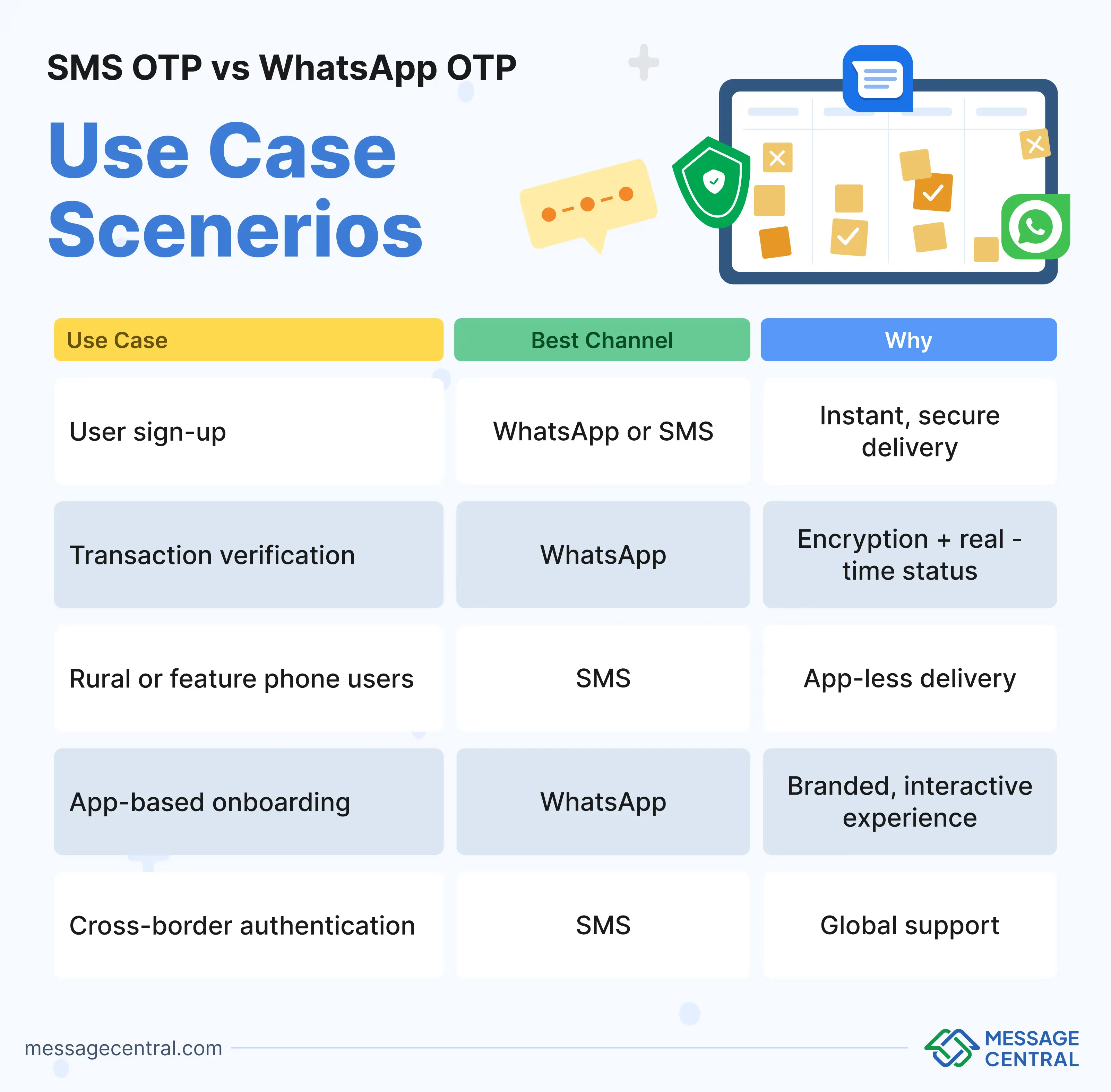
Por que não os dois? A melhor entrega de ambas com VerifyNow
Não consegue decidir? Você não precisa.
API VerifyNow da Central de Mensagens entrega OTP via SMS primeiro. Se a OTP falhar (devido a atrasos, filtragem ou problemas de rede), ela redireciona automaticamente a mesma OTP para o WhatsApp — instantaneamente, para o mesmo número.
Benefícios:
- 99,9% de entrega OTP garantida
- Sem sobrecarga de desenvolvimento — o fallback está embutido
- Modelos pré-aprovados (SMS + WhatsApp)
Envie 1.000 OTPs gratuitamente com o substituto integrado do WhatsApp
Veredicto final: SMS OTP vs WhatsApp OTP
Escolha SMS TOP se:
- Seus usuários abrangem áreas urbanas e rurais
- Você quer cobertura global com configuração mínima
Escolha WhatsApp OTP se:
- Seus usuários já usam o WhatsApp
- Você precisa de insights de entrega, identidade visual avançada e melhores taxas de sucesso
Uso ambos com fallback se:
- Você quer zero falhas de OTP, sempre
- Você se preocupa com as taxas de conversão e com a confiança do usuário
Perguntas frequentes (FAQs)
P1: Posso usar o WhatsApp OTP sem a aceitação do usuário? Não, o WhatsApp exige o consentimento do usuário antes do início das mensagens.
Q2: O que acontece se um SMS OTP não for entregue? Com o VerifyNow, a mesma OTP é enviada instantaneamente via WhatsApp como alternativa.
Q3: O WhatsApp é mais seguro do que o SMS para OTP? Sim, o WhatsApp oferece criptografia de ponta a ponta, enquanto o SMS não.
P4: Posso usar os dois canais para uma jornada de usuário? Sim A API do Message Central foi criada para lidar com fluxos multicanais sem problemas.
Q5: Como faço para começar? Crie uma conta gratuita e envie suas primeiras 1.000 OTPs hoje



.avif)