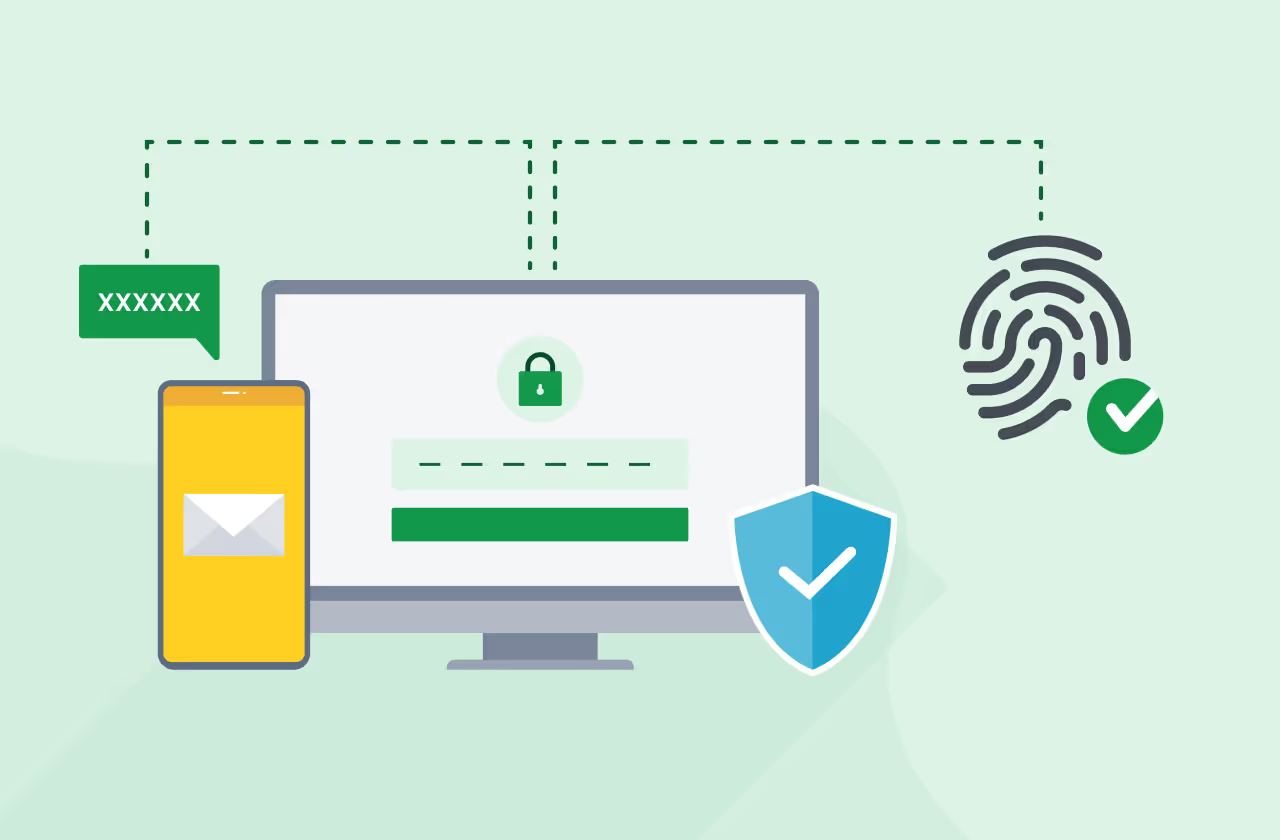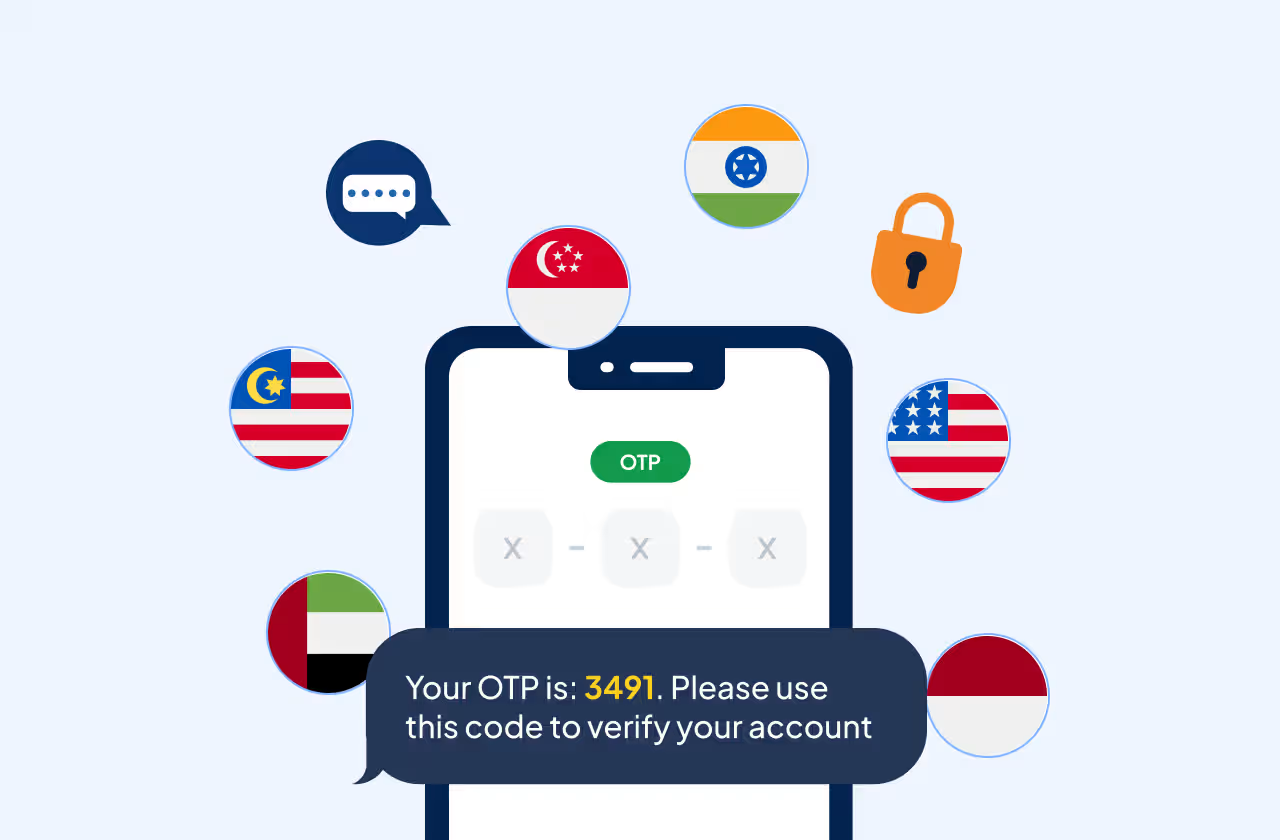
Key Takeways
- You don’t need to register sender IDs in every country to send global OTPs when you use Message Central’s VerifyNow and its pre-approved Sender IDs and OTP templates.
- Telecom rules like 10DLC, DLT, and country-specific approvals can delay your global launch for weeks or even months.
- VerifyNow OTP Verification API solves this by offering pre-approved sender IDs, templates, and direct carrier routes across 190 plus countries.
- You can test, integrate, and start sending OTPs worldwide in minutes instead of waiting for complex registrations.
- Fast, reliable OTP delivery boosts user trust, improves conversions, and helps your app go live globally without friction.
Introduction
Imagine you’re ready to launch your app globally. You’ve built the login flow, your UI is slick, your onboarding campaigns are ready. But there’s one feature you cannot leave to chance: verification. If your users don’t get their one-time password (OTP) quickly, they bounce. Every second of delay or failure can cost conversion, trust, and revenue.
Time to market matters. Your verification setup shouldn’t be the speed bump. Sending OTPs (supposedly the simplest part of your flow) shouldn’t be what holds you back. Yet in many cases, it is. This guide shows why OTP delivery across countries is so hard, and how you can send OTPs globally from a single API without getting bogged down in registration hell.
What “Sending OTPs Globally” Really Means
In your product, a 2FA OTP is a short code sent to a user’s phone or another device to confirm identity. It’s used for login, password reset, payment confirmation, device verification, (all key user touch points. When your users are in more than one country, you need global OTP delivery.
Here’s what that involves behind the scenes:
- For each country you operate in you may face different telecom rules and regulations.
- Some countries require sender ID registration, local entity proof, or special licensing.
- Message templates may need local approval or language variations.
- Local carriers may filter out messages that don’t comply with local opt-in/opt-out rules.
Let’s take a quick look at examples:
- United States: If you are sending SMS for verification you generally need to use a registered 10-digit long code (10DLC) with brand and campaign registration.
- India: The telecom regulator mandates DLT registration for sender IDs and templates before sending bulk or transactional SMS.
- United Arab Emirates (UAE): Local telecom rules require approval of sender identity and content; some local entities need to be involved.
- Spain (and many European markets): European telecom regulations add sender ID constraints, data-privacy rules, and local language requirements.
- Indonesia: Carriers often require local partner registration, brand proof, and local language compliance.
Each of these markets has its own rules. One country may approve in days, another may take weeks. But when you have users in dozens of countries, doing this country by country becomes a major cost and delay.
Why Registering a Sender ID in One Country is a Big Headache
It might seem simple: “Just register the sender ID for the country, get approvals, and send OTPs.” But in reality the process is full of friction.
Here’s why even a single-country sender ID becomes a drain:
- You need to submit your legal business details, website, brand identity, use case, sample messages. Carriers check whether you’re legitimate.
- Campaign registration means specifying exactly what you’ll send. If you change the text, you may need to resubmit.
- Some countries require a local business entity. For example, in markets like Singapore or others a business without local presence may be flagged as “likely scam” and rejected or heavily filtered.
- Local language or cultural requirements might apply.
- If you skip registration or go with an unregistered sender ID you risk high filtering, delayed delivery, or even blocking.
- Even once approved you still deal with local throughput limits, regional routing issues, and carrier filtering.
All this means that for one market you might spend weeks, involve local legal or telecom resources, and delay your launch. If you planned a global rollout, you multiply that pain for every country.
What If You Have Users All Over the Globe? Do You Really Register for 190+ Countries?
Here’s the stark truth: If you treat each country as another project, you may never go live globally quickly. Dozens of registrations, each with its own rules and delays. Local entity, local proof, local approvals. The cost and timeline stack up fast.
But your users expect a seamless experience: open the app, enter phone number, receive OTP, verify, done. They don’t care about your sender ID registration status.
So the real question is: Can you service global users without registering sender IDs in each country? Yes: if you use the right OTP Sender.
One API Instead of Many Registrations
Imagine this scenario: you pick a global verification service that already has sender IDs registered in dozens of countries, templates approved, carrier routing set up. You integrate one API or SDK. You enter into life. You start verifying users in multiple markets simultaneously. No country-by-country registration. No weeks wasted.
That is the one-API approach. Here’s how it works:
- The provider handles local registrations, sender IDs, templates, and carrier compliance.
- You integrate a single endpoint.
- You send OTPs worldwide through the same code.
- Your team focuses on product, not telecom bureaucracy.
Benefits
- Speed: Launch verification for users in new markets almost immediately.
- Cost savings: Avoid local legal, telecom, and registration fees.
- Simplicity: Maintain one code-path instead of dozens.
- Growth: Scale globally without being bogged down by compliance in each region.
Meet VerifyNow: Global OTP API for Instant Verification
Here’s where VerifyNow global OTP API comes in. It gives you the ability to send OTPs across many countries without doing the heavy lifting yourself.
What makes VerifyNow stand out:
- It offers pre-approved sender IDs across multiple countries, so you don’t need to register your own.
- It provides pre-approved OTP templates, eliminating delays from template submission.
- It has direct carrier partnerships and optimized routing, making OTP delivery fast; often within seconds.
- It includes fallback channels (such as WhatsApp) for countries or carriers where SMS may fail.
- It supports 190+ countries with one integration, so your global user base is covered.
- It offers developer-friendly Verification API and SDKs and free test credits so you can validate delivery before production.
- Pricing is designed to be competitive, transparent, and pay-as-you-go.
In comparison, older players might require you to set up local sender IDs, wait for approvals in each country, manage multiple integrations and vendor relationships. VerifyNow simplifies all that.
Quick Guide to Get Started With VerifyNow
- Sign up for free at Message Central (go ahead and select VerifyNow after signup).
- Use test credits to send OTPs to your U.S. numbers and one other region to validate speed and delivery.
- Pick your OTP message template: the standard message is pre-approved so you don’t wait.
- Integrate the API or SDK into your app or backend for OTP triggering. Most teams finish this in minutes.
- Monitor delivery metrics such as time to deliver, carrier success, failure rate.
- Switch to production mode, add credits, and start verifying your global user base.
- Expand into new markets as you grow without new telecom registration delays.
Best practices: keep OTP messages short and clear (“Your AppName code is 123456”). Test across top carriers in each region. Use fallback channel when SMS fails. Optimize UX so users enter codes quickly. Monitor delivery and drop-off trends.
Why Time to Market Is Critical for Your App
When your verification flow is delayed for days or weeks, your user experience suffers. A signup flow that stalls while waiting for OTP registration won’t convert. In global markets you may be losing users before they even hit “verify.”
By moving fast:
- You capture new users before they lose interest.
- You show users you care about both security and usability.
- You avoid regional bottlenecks that stall product launches.
- You scale verification as you scale the product.
Using one integrated global API for OTPs means verification becomes an enabler, not a blocker.
Final Thoughts
If you run a global app or service you don’t want your verification system to be your bottleneck. Sending OTPs is essential, but it should be simple. You should not be delayed by sender ID registration, local telecom rules, or carrier bureaucracy.
The good news is you don’t have to handle every single country manually. With the right global OTP API (like VerifyNow) you can launch verification confidently in multiple markets with one integration.
Don’t let verification slow down your growth. Take control. Integrate fast. Protect users worldwide. Start with a platform built for global OTP delivery, and let your product shine.
FAQs
Q) Do I really need to register sender IDs in every country to send OTPs globally?
A) No. While many countries require their own sender ID or template approvals, using a provider like VerifyNow lets you skip that completely. VerifyNow already has approved sender IDs and templates across many markets, allowing you to send OTPs instantly without local registration in each country.
Q) Do I need 10DLC registration to send 2FA OTPs in the USA?
A) If you use your own number, yes, U.S. carriers require 10DLC registration for OTP and verification traffic. Without it, messages are filtered or blocked. But if you use VerifyNow, you do not need to register anything. VerifyNow provides a pre-approved 10DLC sender for 2FA OTPs, so you can start verifying U.S. users instantly without waiting weeks for carrier approval.
Q) What is the cost of sending OTPs in the USA?
A) OTP pricing in the U.S. varies by provider and routing quality, but VerifyNow offers highly competitive pay-as-you-go rates starting at $0.0045 with no monthly commitments. Most U.S. teams appreciate that VerifyNow provides free test credits, so you can validate speed and delivery before you spend anything.