


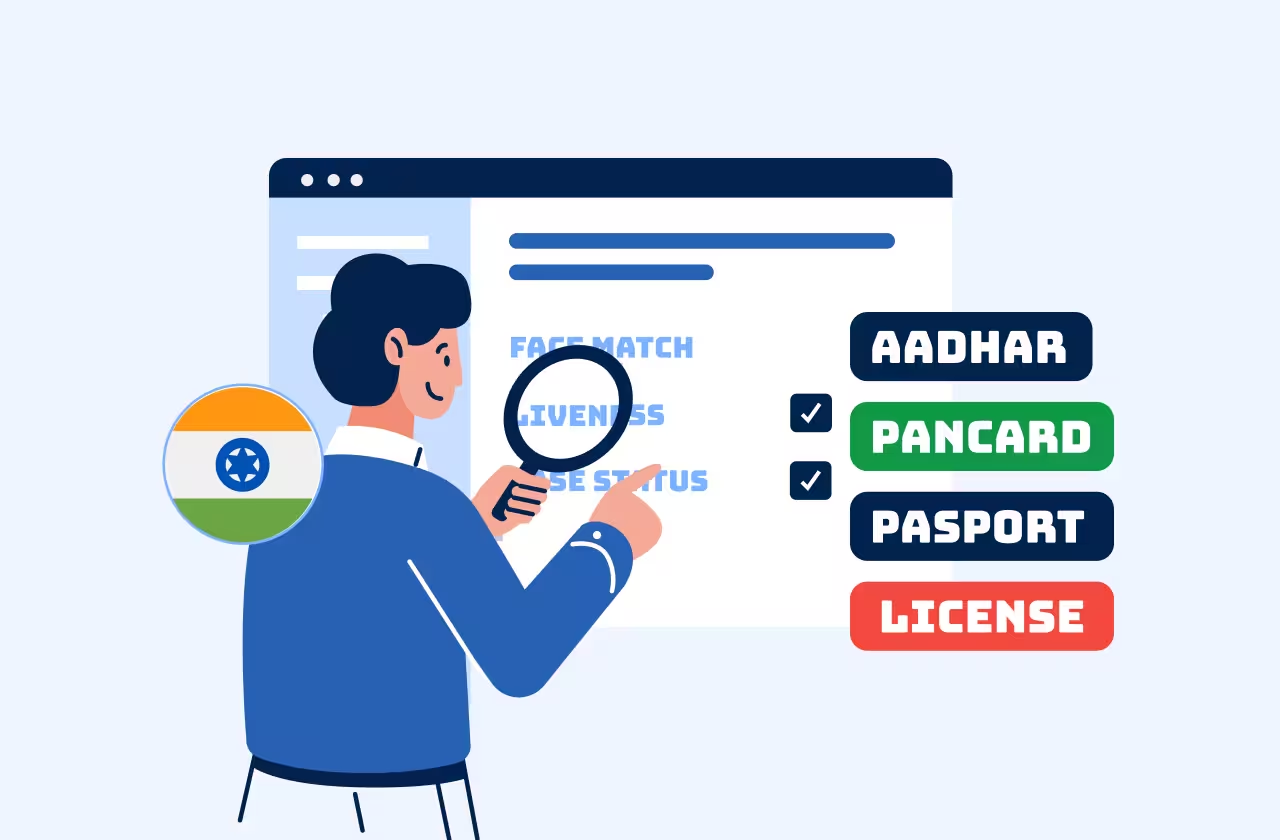
Key Takeways
- eKYC in India is digital identity verification used across the country for fast, compliant onboarding.
- It replaces physical paperwork with Aadhaar, Video KYC, Digital KYC, and API-based verification.
- Businesses use eKYC to reduce costs, improve compliance, prevent fraud, and onboard users in minutes.
Electronic Know Your Customer (eKYC) has transformed how businesses in India verify users. What once took days of paperwork, physical visits, and manual checks can now be completed digitally in minutes.
From banks and fintech startups to telecom providers and insurance companies, eKYC has become the backbone of fast, compliant, and scalable customer onboarding in India. This guide explains what eKYC is, how it works in India, its types, regulations, benefits, and how businesses can implement it correctly.
What is eKYC?
eKYC, or Electronic Know Your Customer, is a digital process used to verify a customer’s identity electronically instead of through physical documents and in-person verification.
In India, eKYC allows businesses to:
- Verify customer identity online
- Reduce onboarding time from days to minutes
- Stay compliant with regulatory requirements
- Minimize fraud and manual errors
Unlike traditional KYC, eKYC relies on digital identity data, APIs, video verification, and secure authentication mechanisms.
Read: When should businesses switch to eKYC in India
How eKYC Works in India
eKYC in India typically follows a structured digital flow:
- User Consent
The customer explicitly consents to identity verification. - Data Capture
Identity data such as Aadhaar, PAN, or video input is securely collected. - Verification & Validation
Data is verified against trusted databases or through real-time checks. - Decisioning
The system confirms whether verification is successful or requires retry. - Onboarding Completion
The customer account is activated or approved.
Most modern eKYC systems like eKYCNow complete this process in under a few minutes, enabling near-instant onboarding.
Give eKYCNow a try with 5 free verifications. Sign up here.
Types of eKYC in India
India supports multiple forms of eKYC depending on regulatory use cases and industry requirements.
Aadhaar-based eKYC
Aadhaar eKYC is one of the most widely used identity verification methods.
- Online Aadhaar eKYC
Uses OTP or biometric authentication (restricted to permitted entities). - Offline Aadhaar eKYC
Uses Aadhaar XML or QR code without sharing Aadhaar numbers.
Aadhaar eKYC is fast and reliable but subject to usage restrictions and regulatory permissions.
Video KYC (V-CIP)
Video KYC, also known as Video Customer Identification Process (V-CIP) in India, is mandated by regulators for certain financial use cases.
It involves:
- Live video interaction
- Face match and liveness checks
- Real-time document validation
- Geo-tagging and audit trails
Video KYC is commonly used by banks, NBFCs, and regulated financial institutions.
Digital KYC (Non-Aadhaar)
Digital KYC verifies users using officially valid documents such as:
- PAN card
- Passport
- Driving license
It often includes:
- OCR document extraction
- Face matching
- Fraud and duplication checks
This method is suitable where Aadhaar usage is restricted.
API-based eKYC
API-based eKYC allows businesses to integrate identity verification directly into their apps or websites.
Benefits include:
- Fully automated onboarding
- Easy integration into signup and login flows
- Scalable verification for high-volume platforms
This is the preferred choice for fintechs, startups, and digital-first businesses.
eKYC Regulations in India
eKYC in India is governed by multiple regulatory bodies depending on the industry.
Key regulatory considerations include:
- RBI KYC Master Directions
- UIDAI guidelines for Aadhaar usage
- SEBI and IRDA regulations for financial services
- Consent management and data minimization
- Secure storage and processing of personal data
Non-compliance can result in:
- Financial penalties
- Suspension of onboarding activities
- Legal and reputational risk
Checkout the step-by-step eKYC process in India.
Industries Using eKYC in India
Banking & Financial Services
- Savings and current account opening
- Loan and credit card onboarding
- Transaction authentication
Fintech & NBFCs
- Digital wallets
- Lending platforms
- Investment and trading apps
Telecom
- SIM activation
- Subscriber verification
Insurance
- Policy issuance
- Claims verification
Gaming, Crypto & Marketplaces
- User identity checks
- Age and fraud prevention
Benefits of eKYC in India
eKYC delivers measurable business value:
- Faster customer onboarding
- Lower operational costs
- Improved regulatory compliance
- Reduced fraud and impersonation
- Better customer experience
- Easy scalability across regions
For digital businesses, eKYC is no longer optional—it is a competitive advantage.
eKYC vs Physical KYC
Challenges & Limitations of eKYC
Despite its advantages, eKYC in India has its own set of challenges:
- Aadhaar usage restrictions
- Internet and device dependency
- False positives or verification failures
- Data privacy and security risks
- Regulatory changes across industries
Choosing the right eKYC approach helps mitigate these risks.
How to Choose the Right eKYC Solution in India
When selecting an eKYC platform in India, businesses should evaluate:
- Regulatory compliance coverage
- API vs SDK integration needs
- Security and encryption standards
- Verification success rates
- Pricing and scalability
- Support and onboarding speed
The right solution balances compliance, speed, and user experience.
Future of eKYC in India
The future of eKYC in India is evolving rapidly:
- Increased adoption of Video KYC
- AI-driven identity verification
- Paperless and consent-based onboarding
- Stronger data protection frameworks
- Unified digital identity ecosystems
Businesses that adopt flexible eKYC systems will be better prepared for regulatory and market changes.
Frequently Asked Questions (FAQs)
What is eKYC in India?
eKYC is a digital method of verifying customer identity electronically using approved data sources.
Is eKYC mandatory in India?
Yes, eKYC is mandatory for many regulated onboarding processes.
Is Aadhaar compulsory for eKYC?
No. Aadhaar is optional depending on use case and regulatory permissions.
Is eKYC legally valid in India?
Yes, when performed as per applicable regulations.
How long does eKYC take?
Most eKYC processes complete within minutes.
Conclusion
eKYC has become the foundation of digital onboarding in India. It enables businesses to verify users quickly, securely, and at scale while staying compliant with evolving regulations.
Whether you are a bank, fintech, startup, or enterprise platform, implementing the right eKYC strategy is critical for growth, trust, and long-term success.


.avif)
.avif)
