


Key Takeways
- eKYC is the fastest and most compliant way to verify customers in India
- Aadhaar OTP and biometric eKYC serve different risk and use cases
- UIDAI and RBI fully support digital onboarding when done correctly
- Manual KYC slows growth and increases compliance risk
- The right eKYC setup can onboard customers in minutes, not days
If your KYC process still involves printed forms, physical signatures, and someone saying “Sir, one document is missing”, we need to talk.
In today’s digital-first India, customers expect onboarding to be quick, smooth, and online. Regulators expect it to be compliant. And businesses? They expect it to work without slowing growth.
That’s exactly where eKYC comes in.
This guide breaks down the step-by-step eKYC process in India, explains Aadhaar OTP vs biometric eKYC, and clears up compliance requirements without jargon, confusion, or unnecessary drama.
(See when exactly should businesses in Inia switch to eKYC)
What Is eKYC in India, Really?
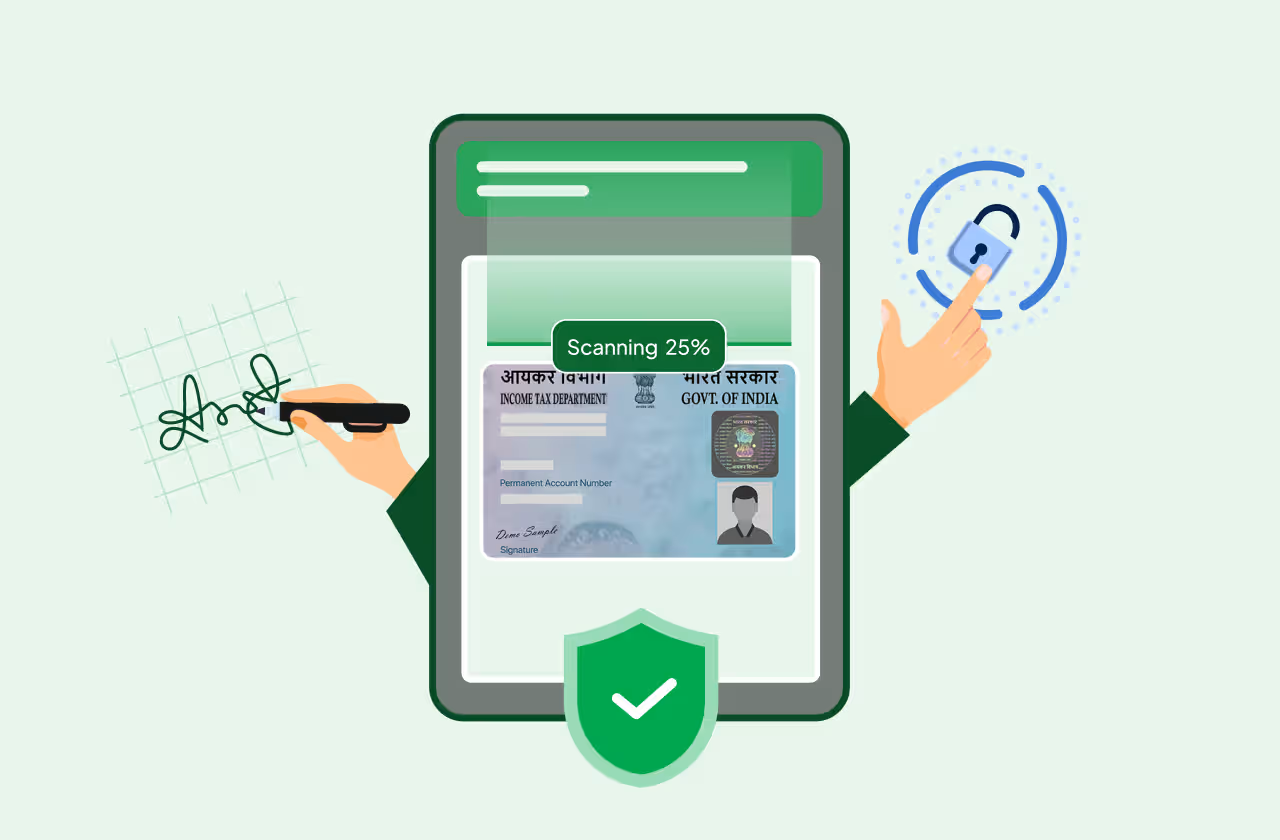
eKYC (electronic Know Your Customer) is the digital process of verifying a customer’s identity using online methods instead of physical paperwork.
In India, eKYC typically involves:
- Aadhaar-based verification
- OTP or biometric authentication
- Digital document checks
- Automated compliance logs
In simple words:
No paper. No physical visits. No long waiting periods.
Banks, NBFCs, fintech companies, lending platforms, and even startups use the online (digital) eKYC process in India to onboard customers remotely while staying compliant.
Why Indian Businesses Are Switching to eKYC (And Why You Probably Should Too)
Let’s be honest: manual KYC was never anyone’s favourite job. Businesses are moving to eKYC because:
- Customers want instant onboarding
- RBI compliance expectations are increasing
- Manual checks lead to errors and delays
- Fraud risks are getting smarter
- Scaling manual processes is painful (and expensive)
Also, your customer can book a flight, order food, and get a loan online, but won’t wait three days for KYC approval. Fair enough.
Get in touch with our team to get started with eKYC if onboarding delays are costing you customers.
The Regulatory Backbone: Why eKYC Is Legit in India
Before we get into the steps, let’s clear one thing up.
eKYC is fully legal and regulator-approved in India (when done correctly).
UIDAI eKYC Regulations (Aadhaar Rules)
UIDAI allows Aadhaar-based eKYC through authorised systems, provided:
- Customer consent is taken clearly
- Data is used only for the stated purpose
- Security and privacy standards are followed
Aadhaar eKYC is widely accepted because it is fast, accurate, and trusted.
RBI Guidelines for Digital Onboarding
RBI supports digital onboarding through:
- Video KYC
- Risk-based KYC processes
- Digital audit trails
In short, RBI wants KYC to be secure and smart, not slow and manual.
AML & KYC Compliance in India
KYC is about identity.
AML (Anti-Money Laundering) is about monitoring risk.
A good eKYC process helps with both by:
- Verifying genuine customers
- Flagging suspicious activity
- Maintaining audit-ready records
Manual processes struggle here. Automated eKYC doesn’t.
Step-by-Step eKYC Process in India
This is the heart of it. Let’s walk through the actual eKYC process, step by step.
Step 1: Customer Consent (Very Important)
Before anything else, explicit customer consent is required.
No consent = no eKYC.
There are no shortcuts here (and regulators don’t appreciate creativity).
Step 2: Aadhaar OTP eKYC – Fast and Simple
This is the most common method.
How it works:
- Customer enters Aadhaar number
- OTP is sent to the Aadhaar-linked mobile
- OTP is verified
- Identity is confirmed
Best for:
- Low to medium-risk onboarding
- Digital-first journeys
- High-volume customers
Limitations:
- Depends on mobile connectivity
- Not ideal for high-risk profiles
Think of OTP eKYC as a quick security check: fast, convenient, and usually enough.
Step 3: Aadhaar Biometric eKYC – Higher Assurance
Biometric eKYC uses fingerprints or iris scans.
How it works:
- Biometric data is captured
- Verified against UIDAI records
- Identity is confirmed with higher confidence
Best for:
- High-risk customers
- Regulated financial products
- Situations needing stronger verification
It’s slower than OTP eKYC, but much stronger. Like airport security vs metro entry.
Step 4: Additional KYC Checks
Most businesses add:
- PAN verification
- Address validation
- Database and watchlist checks
This ensures full KYC and AML compliance.
Step 5: Audit Trail & Secure Storage
Every step is logged:
- Who was verified
- When it happened
- How it was done
This keeps you audit-ready, regulator-friendly, and stress-free.
Aadhaar OTP vs Biometric eKYC: Which One Should You Choose?
eKYC for Different Indian Businesses
Fintech Companies
Speed matters. eKYC enables instant onboarding without compromising compliance.
NBFCs
Critical for loan processing, borrower verification, and RBI compliance.
Banks
Used for digital account opening, video KYC, and branch-less onboarding.
Lending Platforms
Reduces fraud and speeds up loan disbursals.
Startups
Keeps compliance simple while scaling fast.
Common eKYC Mistakes Businesses Make
- Assuming Aadhaar eKYC is always allowed
- Ignoring consent requirements
- Choosing speed over compliance
- Partnering with non-compliant vendors
Fast onboarding is great until it turns into a regulatory headache.
How to Choose the Right eKYC Service Provider in India
Look for a provider that offers:
- UIDAI & RBI-compliant solutions
- Secure API-based eKYC verification
- Scalability as you grow
- Strong data security practices
- Compliance expertise (not just tech)
Get in touch with our team to get started with eKYC and implement it the right way.
FAQs
What is Aadhaar OTP eKYC?
Aadhaar OTP eKYC is a digital identity verification process where a one-time password (OTP) is sent to the mobile number linked with a customer’s Aadhaar and verified online.
eKYCNow enables lightning-fast Aadhaar OTP eKYC with secure APIs, making it ideal for startups and fintechs that need quick, compliant onboarding at low cost.
What is biometric eKYC?
Biometric eKYC is an identity verification method that authenticates a customer using Aadhaar-linked biometric data such as fingerprints or iris scans.
With eKYCNow, businesses can perform secure biometric eKYC for high-risk or regulated use cases, ensuring stronger identity assurance while staying fully compliant with Indian regulations.
How long does eKYC take?
eKYC typically takes a few seconds to a few minutes, depending on the verification method used.Using eKYCNow, Aadhaar OTP eKYC can be completed in seconds, while biometric eKYC takes only minutes, helping startups, fintechs, and banks onboard customers faster without increasing costs.


.avif)
.avif)
