


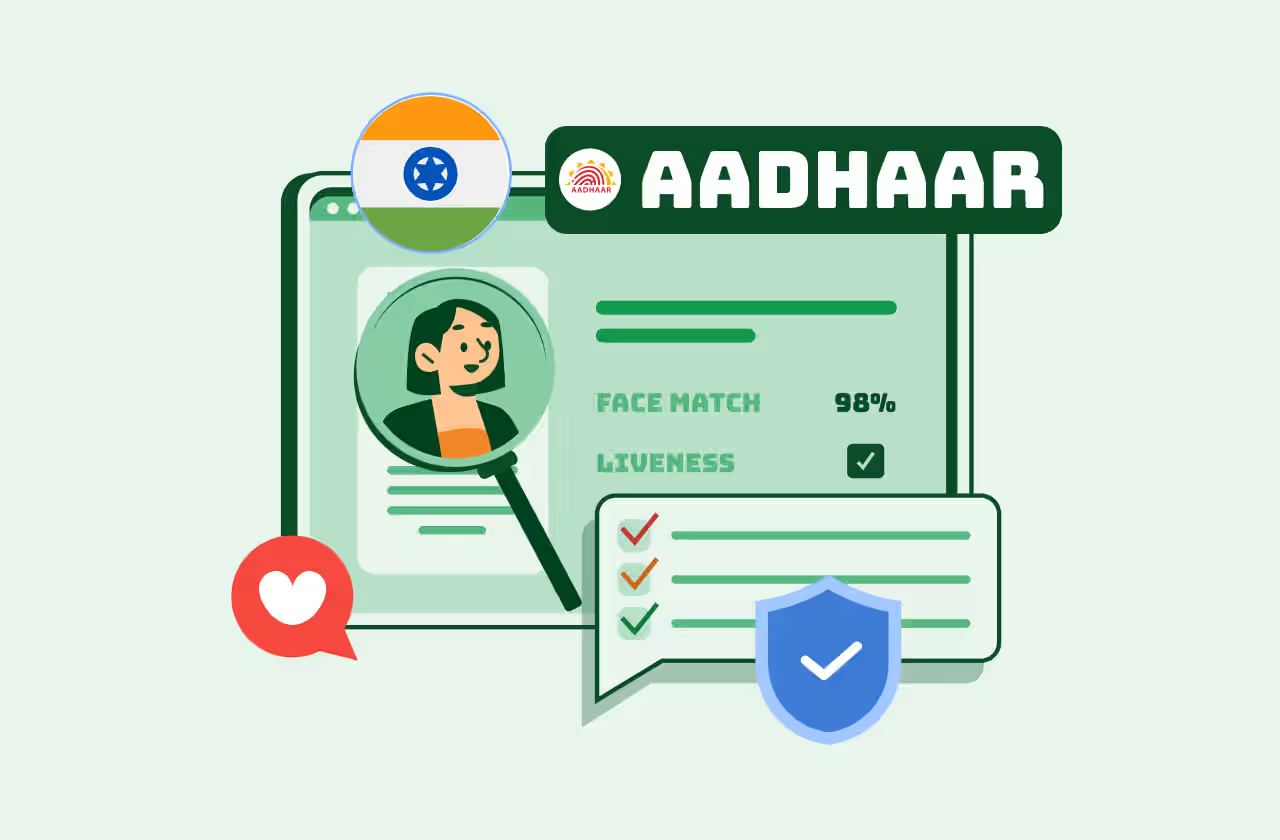
Key Takeways
- eKYC lets Indian businesses verify identities in minutes using Aadhaar with zero paperwork.
- Aadhaar OTP, biometric, and offline XML give users multiple ways to complete KYC securely.
- eKYC drastically reduces onboarding time, fraud risk, and operational costs for businesses.
- Offline eKYC is equally secure and ideal for low-connectivity or privacy-sensitive users.
- eKYC works best for Aadhaar users, but non-Aadhaar customers can still use traditional KYC.
Introduction
In a world that’s gone increasingly digital from ordering groceries to getting a SIM card, identity verification remains a big friction point. That’s where electronic Know Your Customer, or eKYC, comes in especially in India, where a single ID (UIDAI / Aadhaar) can help you verify identity in minutes, without mountains of paperwork.
Whether you run a fintech app, a telecom service, a lending platform or a digital-first startup, eKYC isn’t just “nice to have.” It’s becoming table stakes if you want fast, secure onboarding, less fraud risk, and a frictionless user experience. In this guide, we’ll walk you through exactly what is eKYC in India, how it works (OTP, biometric, offline), why businesses love it, and what you should keep in mind when implementing it.
What does “eKYC in India” stand for and how’s it different?
“eKYC” = electronic Know Your Customer. Instead of collecting scanned documents, ID proofs and physical verification, eKYC lets a business verify someone’s identity online using the Aadhaar infrastructure.
With eKYC, you don’t need copies of passports, utility bills, or handwritten forms. Aadhaar becomes your single source of truth: name, address, photo, date-of-birth, and more, all securely stored and verified.
Thanks to eKYC, the whole verification process becomes paperless, instant, and remote; a big upgrade over manual KYC that can take days or even weeks.
How eKYC Works in India: Aadhaar, OTP & Biometric Verification
What are the authentication methods?
Under the UIDAI ecosystem, eKYC authentication happens either via:
- OTP-based verification: Sends a one-time password to the Aadhaar-linked mobile number.
- Biometric-based verification: Fingerprint, iris (or other biometric) matched against Aadhaar database.
You pick the method based on what works best for your user or context. Some businesses even offer both options to give users flexibility.
Step-by-Step: What happens when someone does Aadhaar eKYC
Here’s what typically goes on under the hood when a user completes eKYC:
- User consent: The user gives permission for their Aadhaar data to be checked. eKYC is voluntary.
- Input Aadhaar number (or VID): User provides Aadhaar or Virtual ID.
- Choose an authentication method: Send OTP or choose biometric, depending on what’s available or preferred.
- Verification with UIDAI: The request goes to UIDAI’s central database for matching. If matched, the user is verified.
- Return minimal verified data: Only essential info (name, address, photo, etc.) is shared with the business, not sensitive info beyond what’s needed.
- Onboarding or next steps: Once verified, the user can be onboarded immediately: open account, get a SIM, start using service, etc.
Aadhaar Paperless Offline eKYC: What & Why It Matters
Not everyone has a good internet connection and that’s part of why UIDAI introduced Aadhaar Paperless Offline e-KYC. It’s a method where users can download a digitally signed (and encrypted) Aadhaar XML file and share that with service providers. No OTP, no biometric scan needed at the moment of submission.
Benefits of offline eKYC:
- Keeps Aadhaar number private (only masked or partial references): Privacy-friendly
- Works even if user is offline or in a remote area: Good for rural / low-connectivity customers.
- Secure and tamper-proof: UIDAI digitally signs the XML, so businesses can verify authenticity.
For businesses, this means you can support remote users, simplify onboarding, and reduce friction (especially in areas with connectivity issues).
Why Indian Businesses Are Embracing eKYC: Real Benefits
If you run a business (fintech, telecom, NBFC, marketplace, or digital service) here’s why eKYC is often a no-brainer:
- Instant & paperless onboarding: No need to scan/upload documents; verification happens in minutes, improving customer sign-up flow.
- Cost & operational savings: Less manpower, no physical storage, no document transport, significantly cuts down operational overheads.
- Better security & fraud prevention: Since verification is against Aadhaar’s live database (with biometric/OTP), chances of fake identity or forged documents drop drastically.
- Scalability for high-volume onboarding: Whether you onboard hundreds or thousands of users daily, eKYC scales smoothly without manual bottlenecks.
- Flexibility with user scenarios: Online eKYC for urban users with good connectivity, offline eKYC for remote users.
These benefits explain why banks, NBFCs, telecom providers, insurance & mutual fund firms, and even digital wallets all use Aadhaar-based eKYC for onboarding.
What Businesses Must Know Before Implementing eKYC: Key Considerations & Best Practices
Consent & Compliance: Always ask for user’s explicit permission
eKYC is voluntary. You must ensure the customer gives their clear consent before you initiate Aadhaar verification.
Use only authorized/approved devices & APIs
For biometric-based eKYC, ensure scanning is done via devices approved under the UIDAI framework. That ensures data integrity and compliance.
Data minimalism & privacy-first approach
Collect only what you need, avoid storing or exposing full Aadhaar numbers if not required. If using offline eKYC, a masked or partial Aadhaar reference is better.
Offer fallback methods
Not everyone will have a stable internet or want biometric verification, so supporting both online (OTP/biometric) and offline eKYC gives flexibility and wider reach.
Security & encrypted storage
Once you receive verified data from UIDAI, store it securely. Treat KYC data with the same sensitivity as other personal data.
Keep transparency with customers
Inform customers what data you collect, why, and how it will be used/stored. Build trust by being transparent about data privacy and security.
Common Questions & Myths Around eKYC Answered
Is Aadhaar-based eKYC mandatory for all services?
Not always. While many sectors (banks, telecom, NBFCs) strongly encourage or require KYC for compliance, adopting Aadhaar-eKYC depends on the service provider’s policies and user consent.
What if OTP doesn’t come or the biometric fails?
In such cases, offline Aadhaar Paperless eKYC can be used (if the user is comfortable). For biometric failures, fallback to OTP (or vice versa) helps avoid onboarding friction.
Is eKYC safe? Can Aadhaar data be misused?
Yes, eKYC is among the most secure identity verification methods. Data is encrypted, digitally signed (in offline mode), and identity is verified directly with UIDAI’s database. But businesses must handle data responsibly, store minimally, encrypt storage, and follow privacy best practices.
What about users without Aadhaar or those who don’t want to share biometrics?
In those cases, traditional KYC methods (document verification, manual checks) may still be required. eKYC works best for Aadhaar-holders who opt in.
Is offline eKYC less secure than online?
Not necessarily. Offline eKYC uses digit-signed XML files from UIDAI. As long as you verify the signature and follow good security practice (share codes, encryption, secure storage), offline eKYC can be robust and privacy-friendly.
eKYC: A Smart Move for Modern Indian Businesses
In short: eKYC is more than a trend, it’s a powerful backbone for any business operating in India today. It brings together speed, security, compliance, scalability, and user convenience under one roof.
If you’re building a fintech, telecom service, lending platform, digital wallet, or any customer-facing product, adopting eKYC (online or offline) can dramatically improve user onboarding experience, reduce costs, and lower fraud risk.
But implementation must be responsible: get user consent, use approved tools/APIs, collect minimal data, and store securely.
In a country as diverse (geographically and digitally) combining online eKYC with offline Aadhaar Paperless options gives you the flexibility to serve urban customers, remote users, youth with poor connectivity, and everyone in between.
So if you’re evaluating KYC options, eKYC deserves serious attention. Not just for now, but for the future of secure, scalable, paperless identity verification in India.


.avif)
.avif)
