Key Takeways
- Biometric eKYC verifies identity using Aadhaar-linked fingerprints or iris scans
- It offers higher assurance than OTP-based eKYC
- Fully supported by UIDAI and RBI when implemented correctly
- Best suited for high-risk, regulated, or high-value onboarding
- Slower than OTP eKYC but significantly harder to misuse
Not all onboarding problems are about speed.
Sometimes, the issue isn’t how fast you verified a user, it’s how sure you are that the person on the other side is who they claim to be.
That’s where biometric eKYC in India steps in.
While OTP-based eKYC works well for low-risk flows, certain use cases demand something stronger: something tied not to a phone number, but to a physical human presence. Biometric eKYC was built for exactly that.
Let’s break down how it works, when it’s required, and why businesses still get it wrong.
If you’re deciding whether biometric eKYC is necessary for your onboarding flow, our experts can help you evaluate the right approach.
What Is Biometric eKYC in India?
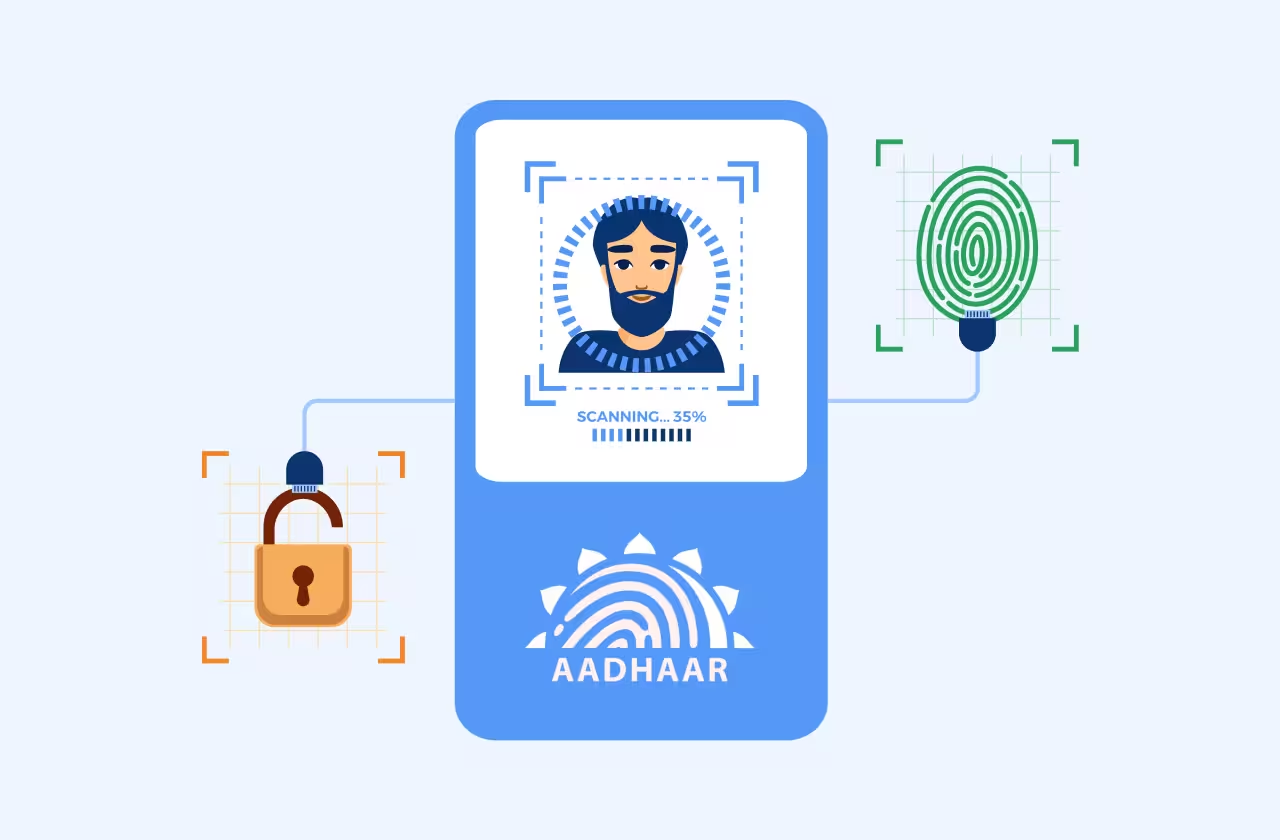
Biometric eKYC in India is a digital identity verification method that authenticates a customer using Aadhaar-linked biometric data (typically a fingerprint or iris scan) to confirm identity with a high degree of confidence.
Instead of asking users to prove ownership of a phone number, biometric eKYC confirms physical presence and biological uniqueness.
In simple terms:
If OTP eKYC checks access, biometric eKYC checks identity.
(See what is the best time for businesses in India to switch to eKYC)
How Biometric eKYC Works (Step by Step)
Biometric eKYC isn’t magic. It’s a tightly controlled, auditable process:
- The customer provides explicit consent
- Biometric data (fingerprint or iris) is captured using a certified device
- The data is encrypted and securely transmitted
- UIDAI validates the biometric input against Aadhaar records
- Identity confirmation is returned to the business
- An audit trail is generated for compliance
No guesswork. No inference. Just verification.
Is Biometric eKYC Legal in India?
Yes, biometric eKYC is legal in India when conducted in accordance with UIDAI guidelines, the Aadhaar Act, and RBI’s digital KYC framework.
That said, legality depends on how it’s used.
Key compliance expectations include:
- Explicit and informed customer consent
- Purpose limitation (use it only when required)
- Secure handling of biometric data
- Proper audit logs and access controls
Used correctly, biometric eKYC is not just allowed, it’s encouraged for high-assurance onboarding.
Biometric eKYC vs Aadhaar OTP eKYC
Both methods exist for a reason. They’re not competitors, they’re tools for different risk levels.
If OTP eKYC is a speed gate, biometric eKYC is a security gate.
When Should Businesses Use Biometric eKYC?
Biometric eKYC makes sense when getting it wrong is expensive.
Common scenarios include:
- High-value financial products
- Loan disbursement and credit underwriting
- Regulated customer onboarding
- Fraud-prone user segments
- Assisted or field-based onboarding
- Rural onboarding where device sharing is common
If a failed verification could lead to financial loss, regulatory scrutiny, or reputational damage: biometric eKYC is usually the right call.
Where Businesses Go Wrong with Biometric eKYC
Ironically, the most common mistake is overusing it.
Biometric eKYC is powerful, but it’s not lightweight. Using it everywhere:
- Slows down onboarding unnecessarily
- Increases operational complexity
- Frustrates low-risk users
Other common missteps include:
- Poor consent communication
- Using non-certified biometric devices
- Treating biometric data casually
- Ignoring fallback options like OTP or video KYC
Strong verification works best when it’s intentional, not default.
Choosing the Right Biometric eKYC Setup
If you’re implementing biometric eKYC in India, the checklist matters more than the pitch.
Look for:
- Alignment with UIDAI and RBI guidelines
- Secure, audited APIs
- Certified device compatibility
- Clear fallback mechanisms
- Scalability without operational chaos
Final Thought
Biometric eKYC isn’t about making onboarding harder.
It’s about knowing when certainty matters more than convenience.
Used thoughtfully, it becomes a trust anchor, not a bottleneck.
And in regulated environments, that distinction makes all the difference.
FAQs
What is biometric eKYC in India?
Biometric eKYC in India is a digital identity verification process that authenticates a customer using Aadhaar-linked biometric data such as fingerprints or iris scans. It verifies identity by confirming physical presence and matching biometric inputs with UIDAI records, offering higher assurance than OTP-based eKYC.
How does biometric eKYC work in India?
Biometric eKYC in India works by capturing a customer’s Aadhaar-linked fingerprint or iris scan and securely validating it against UIDAI records. Once the biometric data matches, the customer’s identity is verified digitally, creating a compliant audit trail for onboarding and regulatory purposes.
What is the difference between biometric eKYC and video KYC?
Biometric eKYC verifies identity using Aadhaar-linked fingerprints or iris scans, while video KYC verifies identity through a live video interaction. Biometric eKYC offers higher identity assurance, whereas video KYC provides flexibility without specialized hardware.


