.svg%20(1).png)


Key Takeways
- Text to pay is a payment mechanism which utilizes SMS as a channel. The same is used for both one-time and recurring payments
- There are multiple ways to implement text to pay including direct payments, secure payment link, payment reminders, and payment confirmations
- There are multiple benefits of text to pay like faster and secure payments, high engagement rates, integration with existing systems etc.
- Multiple industries benefit from text to pay including healthcare, retail, utility, non profits, fitness etc.
- Businesses can easily implement text to pay using SMS API providers like Message Central
Texting is set to be a USD 12.6 billion by 2025, growing at a compound annual rate of 20.3%. This is just SMS marketing’s market size. P2P texting especially in geographies like USA is the most common channel of communication.
Even with the SMS vs iMessage battle, texting has maintained its popularity with all generations of audience in the United States. While audiences are texting, it becomes imperative for businesses to start using the channel too i.e. A2P messaging.
While businesses use texting to send promotional SMS, texting can heavily be leveraged to solve for drop offs at points like checkout i.e. using texting to make the final payment.
What is Text to Pay?
As the name suggests, text to pay is a payment mechanism using SMS as a channel. This simplifies both one-time and recurring payments and is a more mobile friendly and accessible channel.
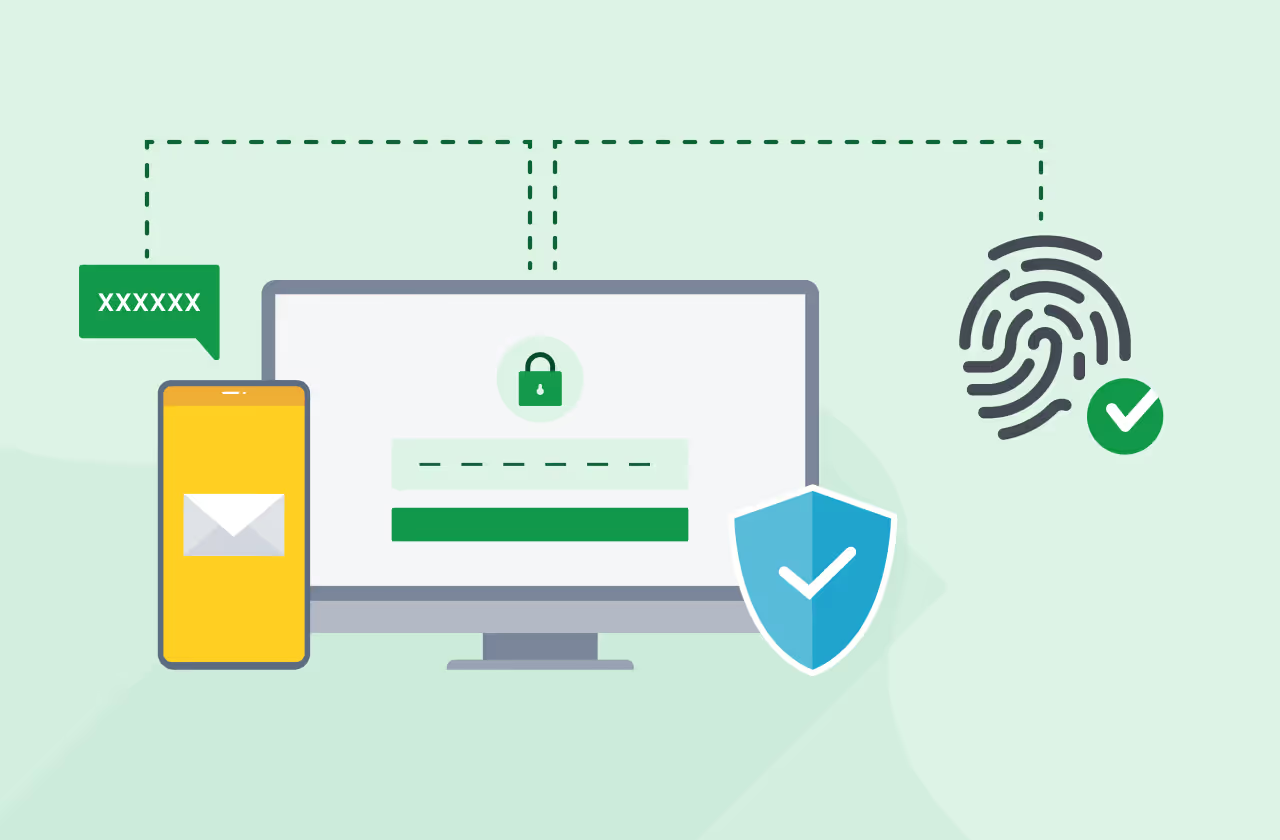
A secure payment link is texted as SMS on the customer’s mobile device from where they can simply click the SMS link. The link takes the users to the payment screen from where they can directly checkout.
You can enable this using a reliable SMS API provider to set triggers as to when the text to pay SMS has to be sent to the user. The functionality offers an opportunity to considerably decrease the drop offs at the checkout stage. This way businesses will not leave revenue at the table.
How Does Text to Pay Work?
As a mechanism, text to pay works very simply. A payment link is sent to the user in an SMS. The same is to be used by the consumer to make the final payment. With this, there are multiple use cases where text to pay is enabled. These include:
- Direct payment via text
This is a situation where the person receiving the text is already a customer.
For example: There is a flash sale on a certain set of products. So, a text is sent to the current set of customers saying that there is a 50% sale on ‘X’ product. You can reply ‘Y’ if you’d want to purchase. If the customer sends a ‘Y’, then the purchase is processed from backend.
This is a use case which is very specific to the brand having customer’s data with them.
- Using a secure payment link
This is a case where a secure link for payment is texted to the consumer on SMS. This leads them to a platform like Stripe or PayPal. In most cases, proper encryption is used to ensure security. The customer will have to input his financial information as an added step though. These types of texts come under the category of transactional SMS.
- Payment reminders
This is another form of text to pay. It is mostly used in case of recurring payments. Customers are texted details like their purchase, amount due, invoice snippet etc. a few days before the payment due date.
With this text to pay, customers are directed using a payment link to log into their accounts and make the payment to ensure uninterrupted services or platform access.
Mobile applications like Splitwise or Google Pay have also been leveraging this use case where people can simply send a text from within the app to remind someone to pay their dues.
- Confirmation of payment
Here, the user is texted regarding the confirmation of the payment made by him. This also includes some details of the payment made. If it is a recurring payment the next due date is also mentioned in the texts sent.
The payment receipt ensures customer satisfaction and giving him an acknowledgement of that his payment has been received on his very own mobile phone and it Is not just another text blast.
Why Use Text to Pay?
- Convenience and Accessibility:
Customers can make payments anytime and anywhere directly from their mobile devices. It simplifies the payment process by eliminating the need for logging into accounts or entering card details repeatedly.
- Faster Payments:
Text to pay accelerates the payment process, reducing the time it takes for customers to complete transactions. Instant payment notifications enhance the cash flow for businesses by ensuring quicker payment cycles. This makes an excellent use case for SMS marketing.
- Improved Customer Experience:
Text to pay Offers a seamless and user-friendly payment experience, leading to higher customer satisfaction and loyalty. It also reduces friction in the payment process, which can lead to fewer abandoned transactions.
- Security:
Utilizes secure, encrypted links sent via SMS to ensure that payment information is protected. Often includes two-factor authentication (2FA) to add an extra layer of security.
- Higher Engagement Rates:
SMS has higher open and engagement rates compared to emails, ensuring that customers see and act on payment requests promptly.
- Cost-Effective:
Text to pay reduces the need for physical invoices or paper statements, cutting down on printing and mailing costs. It also minimizes transaction fees compared to traditional payment methods, benefiting both businesses and customers.
- Integration with Existing Systems:
You can easily integrate text to pay with existing CRM and billing systems, streamlining operations and reducing administrative overhead. With SMS API providers like Message Central, you can automate payment reminders and follow-ups, saving time and resources for businesses.
- Versatility:
Suitable for a wide range of industries including healthcare, utilities, retail, and more. It can be used for one-time payments, recurring billing, and even donation collections.
Who Should Use Text to Pay?
- Healthcare
Applications: Medical bill payments, appointment fees, prescription renewals.
Benefits: Streamlines the payment process, reduces administrative work, and enhances patient convenience.
- Retail
Applications: Payment for online orders, curbside pickups, and in-store purchases.
Benefits: Provides a quick and easy payment option, enhances customer experience, and reduces cart abandonment using SMS for retail.
- Utilities
Applications: Payments for electricity, water, gas, and other utilities.
Benefits: Facilitates timely payments, reduces late payments, and improves customer satisfaction.
- Hospitality
Applications: Booking confirmations, room service charges, event reservations.
Benefits: Enhances guest experience by offering a convenient payment method, reduces wait times, and streamlines operations.
- Automotive
Applications: Service appointments, repairs, car rentals.
Benefits: Simplifies the payment process, reduces waiting times, and improves customer satisfaction. The results of the text to pay SMS sent can be tracked through an SMS dashboard.
- Nonprofits
Applications: Donations, event registrations, membership fees.
Benefits: Increases donation rates by providing an easy payment method, engages donors more effectively, and simplifies fund collection.
- Education
Applications: Tuition payments, event fees, fundraising.
Benefits: Simplifies fee collection, reduces administrative overhead, and enhances parent/student experience.
- Fitness and Wellness
Applications: Membership fees, class bookings, personal training sessions.
Benefits: Enhances member experience, ensures timely payments, and reduces administrative tasks.
Solve Text to Pay with Message Central
Message Central is a CPaaS solution with SMS APIs, SMS verification APIs and WhatsApp marketing platform. To use Message Now (SMS APIs) by Message Central, you can get in touch with the team. The platform provides:- Bullet points/ Numbered list
- Global SMS connectivity
- The best SMS routes
- Detailed SMS API documentation
- 24/7 customer support
- High SMS deliverability rate