A2P 10DLC Registration: Fees and Timelines (2026)
US carriers only deliver business texts from 10-digit numbers registered for 10DLC. Here’s who needs it, what it costs, how long it takes and how to send OTPs while you wait.
Who Needs to Register for 10DLC?
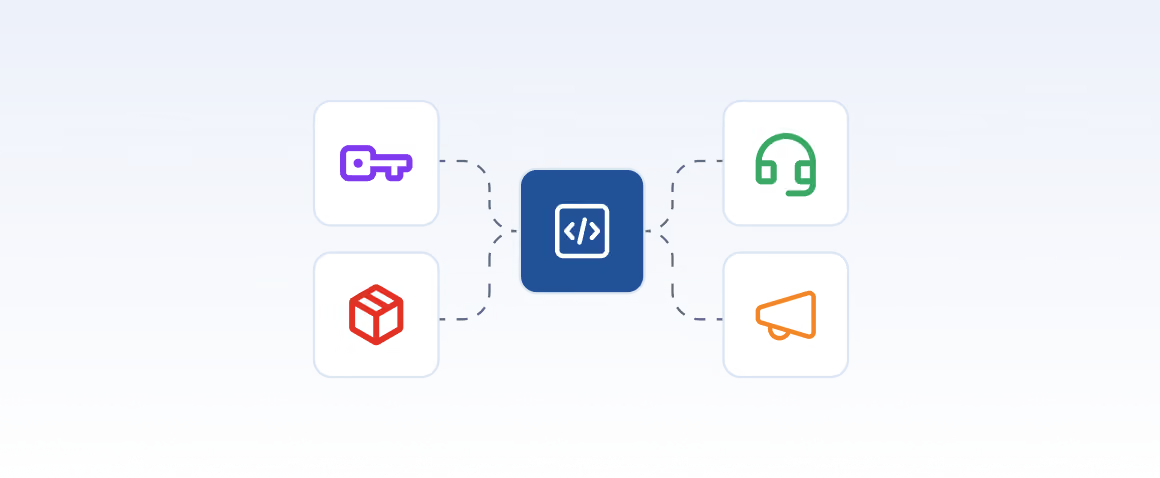
Any business sending A2P texts to US mobiles from a 10-digit number: login codes, alerts, support and marketing texts, through Twilio or any other SMS API.
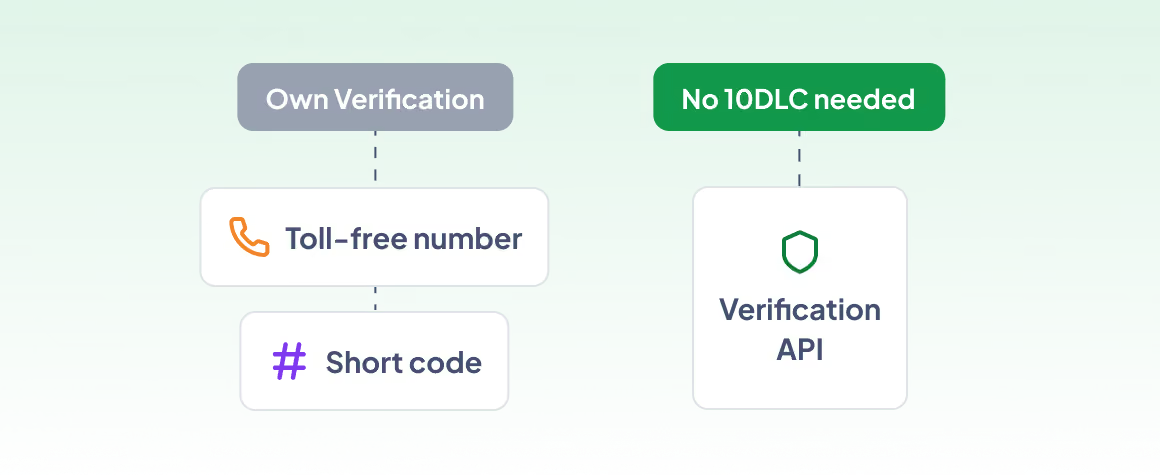
Senders using only a toll-free number or short code, or a provider that sends from its own registered numbers, as most verification APIs do.
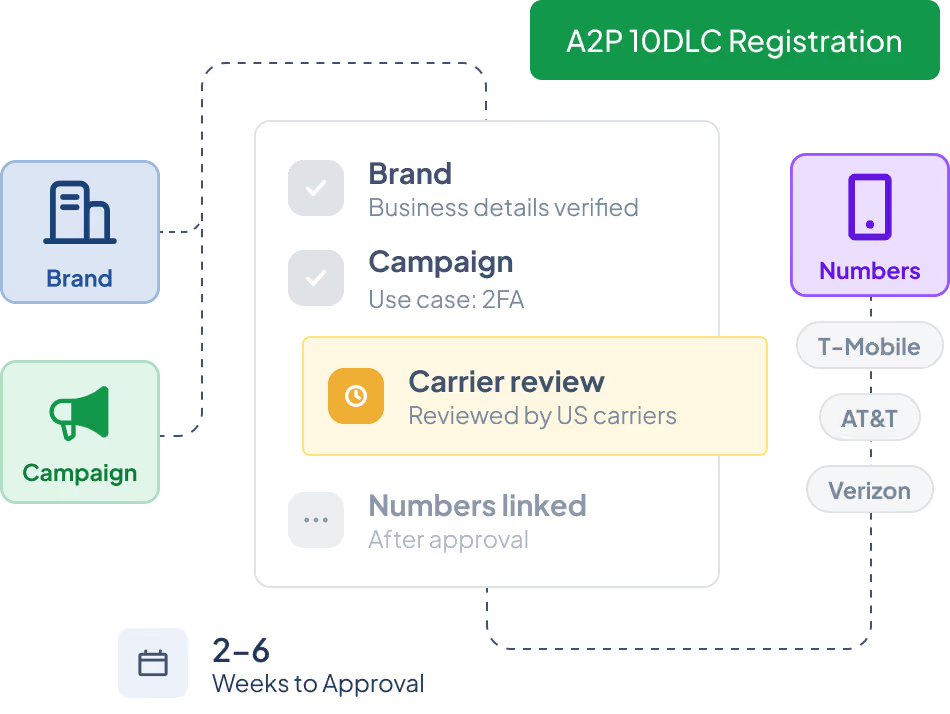
How 10DLC Registration Works

Register your brand.
Legal name, EIN, address and website, checked against public records.

Register a campaign for each use case.
Your use case (e.g. 2FA), opt-in flow, sample messages and STOP/HELP wording.

Wait for carrier review.
Carriers approve it, ask for changes or reject it.

Link your numbers.
Attach your numbers to the approved campaign and start sending.
10DLC Fees
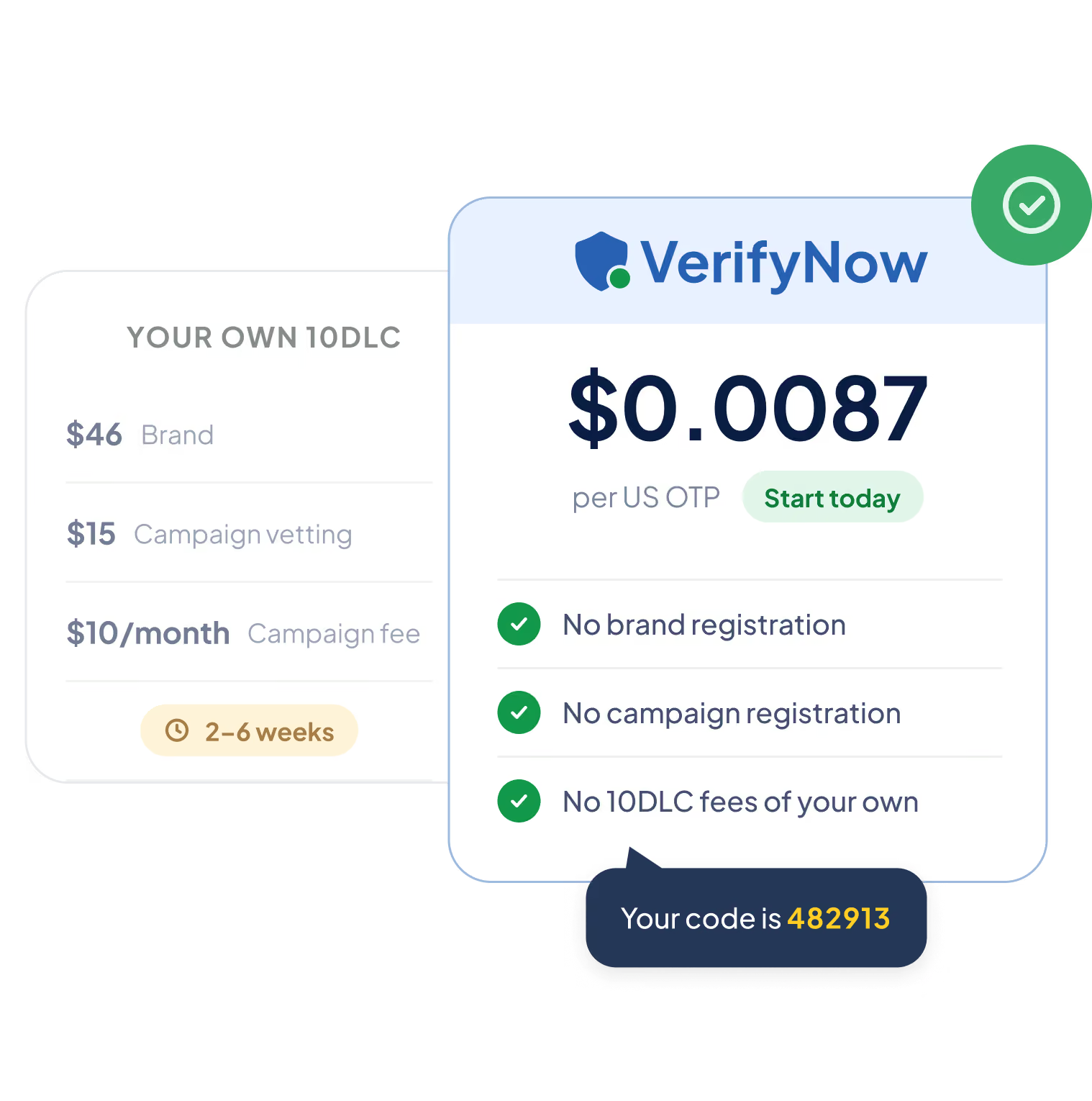
One-time registration fees, a monthly campaign fee and per-message carrier fees, on top of your SMS price. Twilio’s figures shown.
Registration and campaign fees as listed by Twilio (The Campaign Registry raised some fees on 1 August 2025). Carrier fees as published for long-code SMS in 2026. Check your provider’s current fee page before you budget.
Sources (checked 13 Nov 2026): Sociocs, Twilio 10DLC fees · Kanal, Twilio SMS pricing 2026 · our own 10DLC OTP SMS guide (fees verified 5 Nov 2026).
How Long Does 10DLC Registration Take?
Brand checks take days; carrier review takes longer. Plan for 2–6 weeks, more if a campaign is rejected.
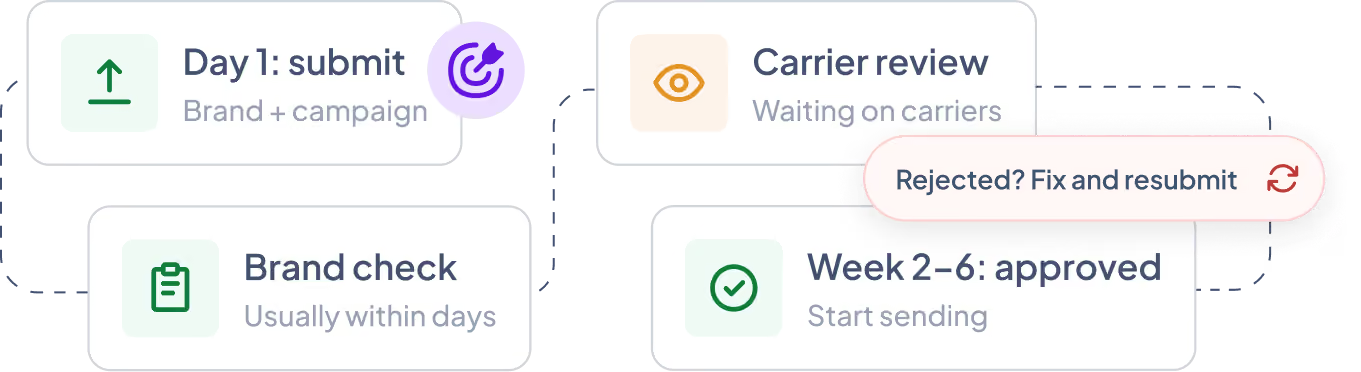
Why 10DLC Campaigns Get Rejected

Website doesn’t match the brand.
The site is missing, under construction, or names a different business than your registration.

No SMS terms or privacy policy.
Your privacy policy should say you don’t share mobile numbers or opt-in data with third parties for marketing.

Unclear or pre-ticked opt-in.
Reviewers need to see exactly where and how users agree to receive texts, and consent can’t be pre-checked.

Sample messages don’t match the use case.
A “2FA” campaign with promotional samples, or samples without your brand name, gets sent back.

Missing opt-out and help wording.
Include “Reply STOP to opt out” and “Reply HELP for help” where required.

Brand details don’t match public records.
The legal name and EIN must match exactly.
Our guide to 10DLC campaign approval best practices covers each one in detail.
Sources: Twilio: improving your chances of A2P 10DLC approval · Twilio error 30925: opt-in must be unchecked by default.
10DLC vs Toll-Free vs Short Code
See 10DLC vs toll-free vs short code for 2FA OTPs for throughput and cost details.
10DLC Guides
Send OTPs Without Your Own 10DLC Registration
Only sending verification codes? VerifyNow sends OTPs from a pre-approved 2FA campaign, so you can start the day you sign up, with no 10DLC registration or fees of your own.
Need to send marketing or other non-verification texts from your own number? Those still need your own 10DLC brand and campaign.
Frequently Asked Questions
Which is the best OTP Verification API for apps and websites?
An identity API lets your app check facts about a user directly with their mobile carrier. For example, it can confirm that a phone number belongs to the device in use, whether the SIM was recently swapped, or whether the details a user entered match the carrier's records.
How is Identity API different from SMS OTP?
SMS OTP sends a code and asks the user to type it back. Identity API asks the carrier to confirm the number directly, usually with no action from the user. It's faster and nothing can be phished. SMS OTP stays available as a fallback.
See how network APIs stop SMS pumpingWhat is silent network authentication?
It's a way of verifying a phone number in the background. The carrier confirms that the request is coming from the SIM behind that number, so the user never sees a code.
What's the difference between Number Verification v1 and v2?
v1 verifies silently over the user's mobile data connection. v2 adds SIM-based authentication, which uses the SIM's cryptographic credentials and also works over Wi-Fi and VPN. v2 also supports the v1 method.
What does the SIM Swap API tell me?
It tells you whether the SIM linked to a number changed within a period you choose, or the date of the most recent swap. A very recent swap before a sensitive action is a strong fraud signal.
Which countries are supported?
Number Verification is live in 23 countries with 57 operators, SIM Swap in 19 countries, KYC Match in 10 and Device Swap in 4, across North and Latin America, Europe and Asia Pacific. Availability varies by country and carrier, and new markets are added every quarter. For the full country and operator list, request the coverage sheet using the form on this page.
What happens if a carrier can't verify a user?
The API returns no match, or no result, and your app falls back to SMS OTP through VerifyNow. Your user still gets verified.
Does Identity API share my users' personal data?
No. Most APIs return a yes or no, or a date. KYC Match and Age Verification only say whether the details match; the carrier's records are never sent to you.
How do I get access?
Sign up and request sandbox access from the Identity API console. Sandbox requests are reviewed within 3 working days. Production access follows a business review with country-specific requirements for each carrier.
How much does Identity API cost?
Pricing depends on the APIs, countries and volumes you need. Request the coverage and pricing sheet using the form on this page, and our team will send it the same business day.
Ready to Get Started?
Build an effective communication funnel with Message Central.