


Key Takeways
- Passkeys are the strongest consumer-grade authenticator: phishing-resistant, free per use, sub-second user friction; but adoption is only ~25-35% in 2026.
- Use SMS OTP for new signups (universal coverage); use passkeys for users who've enrolled and for high-stakes actions.
- Migration is a 4-phase 18-24+ month arc: add passkey support → prompt opportunistically → default for new signups → default for all enrolled users.
- Implementation alongside SMS OTP requires WebAuthn library on client and server (SimpleWebAuthn, webauthn-rs, etc.) plus credential storage in user record.
- SMS OTP will remain essential as the universal fallback for at least the next decade; don't rip it out, layer passkeys on top.
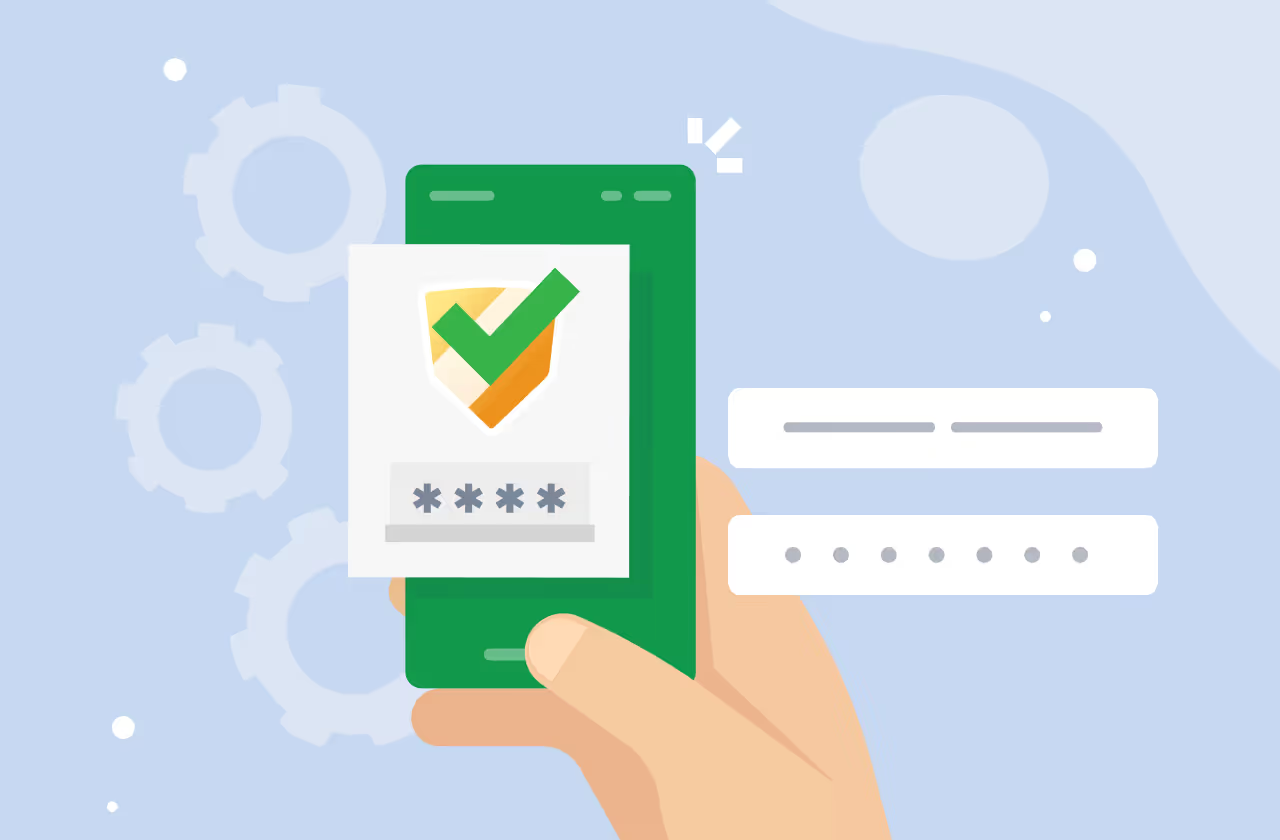
Passkeys are the strongest consumer-grade authenticator available in 2026: phishing-resistant, free per use, and supported on every major US platform (Apple, Google, Microsoft, all major browsers). They're better than SMS OTP on every dimension except one: adoption. Most US consumer users haven't enrolled passkeys yet, and forcing them to during a critical user-acquisition flow tanks conversion. This guide walks through when passkeys win, when SMS OTP wins, the right migration architecture, and how to layer both in a single verification stack.
What is a Passkey?
A passkey is a phishing-resistant authentication credential built on the FIDO2/WebAuthn standard, stored in a user's device hardware (Apple Keychain, Google Password Manager, Microsoft Hello, hardware security key) and used to authenticate without a password. The underlying cryptography is asymmetric public-key; your service stores the public key; the user's device holds the private key in secure hardware that's never exposed.
The user experience: tap a button, authenticate with biometric (Face ID, Touch ID, fingerprint) or device PIN, signed in. No code to enter. No password to remember. No SMS to wait for.
The FIDO Alliance publishes the canonical adoption guidance and standards. Major US platforms (Apple, Google, Microsoft) backed passkeys with the May 2022 joint announcement; broad consumer support shipped through 2023-2025.
Passkeys vs SMS OTP: Side-by-Side
DimensionSMS OTPPasskeysPhishing resistanceVulnerable (users can be tricked into reading codes)Resistant (cryptographic binding to origin)SS7/SIM swap riskYesNoUser friction at useRead code, enter (10-30s)Biometric tap (sub-second)Setup frictionNone (already have a phone)One-time enrollment (15-60 seconds)Cost per verification$0.01-0.04 in US$0 (no message sent)Coverage~99% (every mobile user)~40% in 2026 (rising; depends on platform)Account recovery on device lossEasy (still have phone number)Harder (depends on cloud sync; recovery codes)NIST SP 800-63B classification"Restricted""Preferred"User adoption (US)~99% (universal)~25-35% in 2026 (rising)
Passkeys win on every security and UX dimension. SMS OTP wins on coverage and adoption. The right strategy in 2026 isn't to pick one, it's to support both and migrate users from SMS to passkeys as adoption grows.
When to Use Each
Use SMS OTP when:
- You're verifying a brand-new user at signup. Forcing passkey enrollment at signup tanks conversion (most users don't have passkeys configured and the setup adds 30-60 seconds at the worst possible moment).
- You need universal coverage. SMS reaches every US mobile user; passkeys reach only those who've enrolled.
- You're operating in low-stakes contexts (consumer apps with no money or sensitive data) where SMS-OTP-level security is adequate.
Use passkeys when:
- The user has already enrolled a passkey on your service (offer it as their default factor).
- You're authorizing high-stakes actions (large transactions, security-setting changes, admin actions).
- The user is on a device and platform that supports passkeys (~95% of US devices in 2026 — Chrome on Windows, Safari on Apple, etc.).
- You want phishing resistance for accounts that hold meaningful value.
Use both layered:
- SMS OTP at signup for universal-coverage verification.
- Prompt passkey enrollment over the first 30-90 days during high-engagement moments.
- Once a passkey is enrolled, default to passkey for that user; fall back to SMS OTP only on devices where the passkey isn't available.
- Step up to passkey for high-stakes actions even if the user logged in with SMS.
The Migration Pattern
Migrating a US consumer base from SMS OTP to passkeys is a multi-year arc, not a flip-the-switch event. The right phased rollout:
Phase 1 (months 1-6): Add passkey support alongside SMS
No user is forced to enroll. Users who proactively enable passkeys in account settings get the better UX immediately. Track enrollment rate.
Phase 2 (months 6-12): Prompt passkey enrollment opportunistically
After a successful SMS OTP verification, show a one-line prompt: "Skip future codes — enable passkey." Frame as a security and convenience upgrade. Track conversion on the prompt.
Phase 3 (months 12-18): Make passkey the default for new signups
New users get a passkey-first signup flow with SMS as the fallback option. Existing users still default to SMS.
Phase 4 (months 18-24+): Default to passkey for all users with one enrolled
SMS becomes the fallback for users who haven't enrolled yet and for cross-device-passkey scenarios.
Don't compress this timeline. Forcing passkey enrollment on existing users tanks login success while users figure out the new flow. Patience pays.
Common Misconceptions
"Passkeys eliminate the need for SMS OTP."
Not in 2026. Passkey adoption is rising fast but isn't universal. SMS OTP remains essential as the universal fallback for users without passkeys, for cross-device scenarios where the passkey isn't available, and for account recovery on device loss.
"Passkeys are the same as biometric login."
Not exactly. Passkeys use biometric or device-PIN as the local unlock mechanism, but the cryptographic credential is the passkey itself. The biometric never leaves the device — only the cryptographic signature is sent to your service.
"Passkeys are tied to a specific device."
Originally yes; now mostly no. Apple syncs passkeys via iCloud Keychain across the user's Apple devices; Google syncs via Google Password Manager; Microsoft via Windows Hello. Cross-platform sync (e.g., Apple → Android) is in progress through the FIDO Alliance's Cross-Device Authentication standard but isn't seamless yet.
"Passkeys make account recovery harder."
They can, if you don't plan recovery flows. Always offer recovery codes at passkey enrollment (8-10 single-use codes the user saves). Without them, users who lose all their devices are locked out.
Implementation: Adding Passkeys Alongside SMS OTP
If your stack already supports SMS OTP via a verification API, adding passkeys is a parallel track:
- WebAuthn library on the client: Use SimpleWebAuthn (browser/Node) or platform-native APIs (iOS AuthenticationServices, Android Credential Manager). The client handles the cryptographic ceremony.
- WebAuthn library on the server: Verify the cryptographic signatures from the client during enrollment and authentication. Library options: SimpleWebAuthn (Node), webauthn-rs (Rust), python-webauthn (Python), java-webauthn-server (Java).
- Credential storage: Store the user's public key, credential ID, and metadata in your user record. Keep the private key on the user's device (you never see it).
- UX flow: Enroll: user verifies via existing factor (password or SMS OTP) → "enable passkey" prompt → biometric tap → passkey created. Authenticate: user enters username → "use passkey" → biometric tap → signed in.
- Fallback path: If passkey fails or device doesn't support it, fall back to SMS OTP via your existing verification API.
Reference implementations from webauthn.guide and the passkeys.dev developer site cover the standard patterns end-to-end.
FAQs
Should US consumer apps add passkey support in 2026?
Yes, as an optional upgrade alongside SMS OTP. Don't make it mandatory yet. Passkey adoption is rising but not universal — SMS remains the right default for new signups. Adding passkeys as an optional enrollment captures the security and UX upside for early adopters and positions your stack for the long-term migration.
How do passkeys compare to authenticator-app TOTP?
Passkeys are stronger than TOTP on every dimension except adoption. TOTP has somewhat broader adoption among security-conscious users (people who already use Google Authenticator or Authy), but passkeys are easier to enroll and faster to use. The right pattern is to offer all three: SMS OTP (universal), TOTP (security-conscious users), passkey (high-assurance default for users who've enrolled).
What happens to my SMS OTP integration once passkey adoption hits 50%?
Nothing immediate. SMS OTP remains essential for the remaining 50%, for account recovery, and for users who haven't enrolled passkeys on the device they're using right now. Plan for SMS OTP to be relevant for at least the next decade. Don't rip out the integration; just shift it from primary to fallback over time.
Build the Stack That Spans 2026 to 2030
The right verification architecture in 2026 isn't passkey-only or SMS-only — it's both, layered, with passkey as the strong default for users who've enrolled and SMS OTP as the universal fallback. VerifyNow for USA handles the SMS + WhatsApp side with pre-approved 10DLC routes and sender IDs (start sending in under 5 minutes), pairs cleanly with any WebAuthn library on the passkey side, and gives you the foundation for the multi-year migration. Free test credits, no credit card required.



.avif)