


Key Takeways
- OTP verification is a security process where a a One-Time Password (OTP) is sent to a user'sregistered mobile number or email address
- There are multiple benefits of OTP verification including enhanced security, 2FA, better user experience etc.
- Implementing OTP verification is a simple process if you have the right OTP SMS provider
- Always select a service provider which provides premium routes and a simplified setup like Verify Now by Message Central which also provides 24/7 customer support
- OTP SMS APIs should also have a detailed documentation to make the platform developer friendly
OTP verification is the most widely used identity-confirmation method in 2026, with 93% of enterprises relying on it across at least one consumer-facing flow. It works by sending a one-time password to the user's mobile number (or email) and requiring them to enter that code back into the app or website. This complete guide covers what OTP verification is, how it works under the hood, exactly how to implement it (with code samples), the 8 best practices that separate secure implementations from vulnerable ones, industry use cases, and how OTP verification compares to WhatsApp OTP and Silent Network Authentication.
What is OTP Verification?
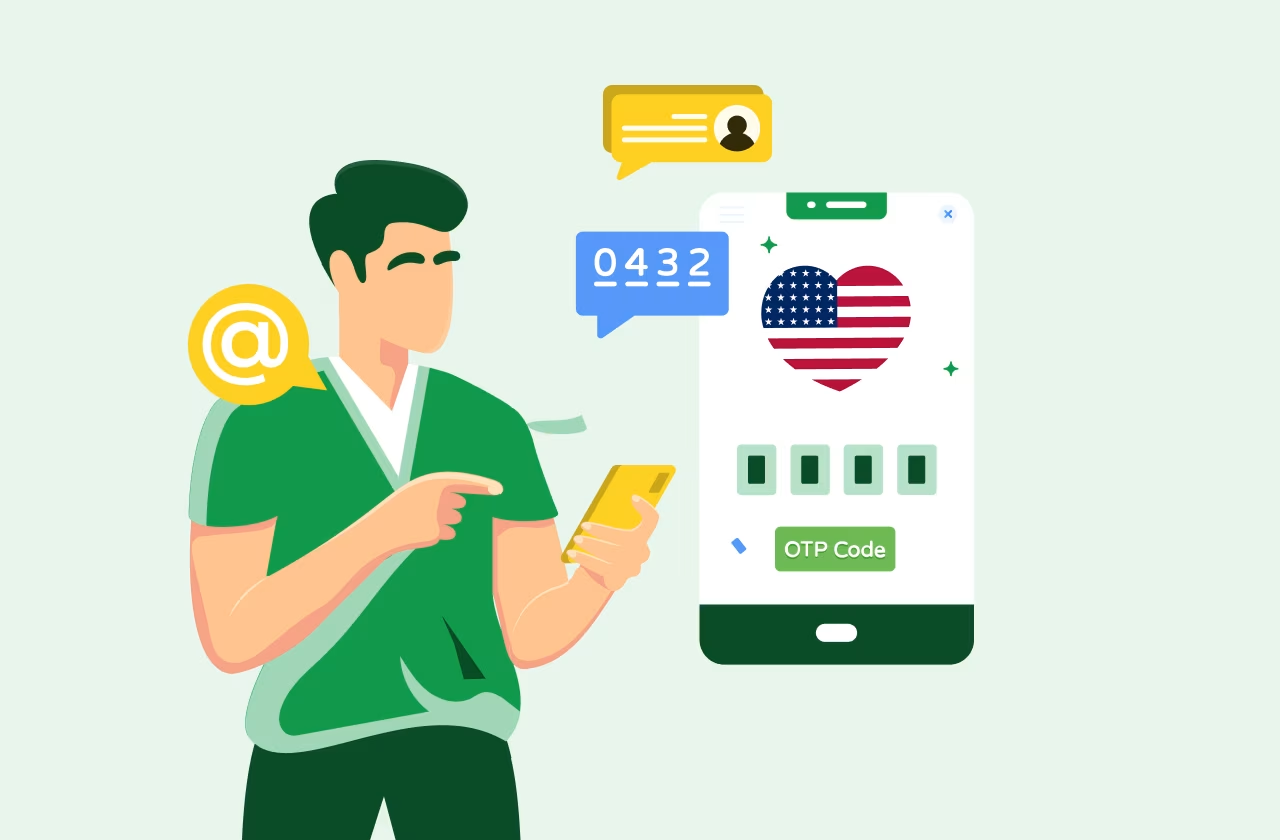
OTP verification, or One-Time Password verification, is a security process where a unique temporary code is sent to a user's registered mobile number or email address. The user enters this code to confirm their identity and complete an action: logging in, completing a transaction, resetting a password, or accessing sensitive information. Unlike static passwords, an OTP is valid for only one attempt and expires within 5-10 minutes, adding a meaningful layer of security on top of credentials alone.
To enable OTP verification in a business application, you integrate with an OTP verification API such as Message Central's VerifyNow. With VerifyNow you can send OTP SMS in India without DLT registration and in the U.S. without your own A2P 10DLC registration, thanks to pre-approved routes and sender IDs.
How OTP Verification Works (Technical Flow)
The standard OTP verification flow has 6 steps:
- User triggers verification by entering their phone number at signup, login, password reset, or high-risk action.
- Your backend calls the OTP API with the phone number, sender ID, and template ID.
- OTP API generates a random 4-6 digit code, stores a hashed copy with expiry, and sends the SMS (or WhatsApp message) to the carrier.
- User receives the OTP on their device, typically within 2-15 seconds.
- User enters the OTP back into your app. Modern mobile apps auto-fill via SMS Retriever API (Android) or SMS Code Autofill (iOS).
- Your backend validates the OTP via the API's verify endpoint. If it matches the stored hash and is unexpired, the user is authenticated.
Code Sample: OTP Verification With VerifyNow
Send OTP in Node.js:
const send = await fetch('https://api.messagecentral.com/v1/verification/send', {
  method: 'POST',
  headers: { 'Authorization': 'Bearer YOUR_API_KEY', 'Content-Type': 'application/json' },
  body: JSON.stringify({
    countryCode: '91',
    mobileNumber: '9876543210',
    flowType: 'SMS',
    senderId: 'MSGCTL'
  })
});
const { verificationId } = await send.json();
Validate OTP:
const result = await fetch('https://api.messagecentral.com/v1/verification/validate', {
  method: 'POST',
  headers: { 'Authorization': 'Bearer YOUR_API_KEY', 'Content-Type': 'application/json' },
  body: JSON.stringify({ verificationId, code: userEnteredCode })
});
const { verified } = await result.json();
Benefits of OTP Verification
1. Enhanced Security
Traditional static passwords are vulnerable to brute-force, credential stuffing, and password reuse. OTP verification requires a unique code per attempt that expires fast, dramatically reducing the risk of unauthorized access.
2. Two-Factor Authentication (2FA)
OTP is the most common second factor in 2FA flows: something you know (password) + something you have (phone receiving the OTP). The 2FA market is projected to reach USD 44.67 billion by 2030.
3. Passwordless Authentication
OTP can replace static passwords entirely: users authenticate with phone number + OTP only. Removes the password-reuse and breach-reset overhead.
4. Protection Against Bots
Requiring an OTP from a real phone number defeats most bot signups and reduces fake account creation by 80-95% in typical implementations.
5. Global Reach
OTP SMS works on every SIM in the world. No app install. No internet required. Perfect for global user bases.
OTP Verification Best Practices
The difference between a secure OTP implementation and a vulnerable one comes down to 8 practices. Get them right and you defeat SIM swap, phishing, brute force, and SMS pumping. Miss them and the OTP becomes the weakest link.
- Use 6-digit OTPs. Brute-force search space is 1 million for 6 digits vs. only 10,000 for 4 digits. The few extra characters are worth the security.
- Set short expiry windows. 5-10 minutes is the sweet spot. Longer windows widen the attack surface; shorter windows hurt UX when international SMS routes are slow.
- Rate-limit verification attempts. 5 failures per phone number per 15 minutes prevents brute force. Apply per-IP rate limits too.
- Implement SMS pumping protection. Detect anomalous traffic spikes to high-cost destination prefixes; block sends preemptively. SMS pumping costs businesses 5-15% of total OTP spend.
- Use direct operator connectivity. Avoids gray routes, ensures sub-10-second delivery, and preserves sender ID. Worth the modest cost premium.
- Use SMS Retriever API on Android. Auto-fills OTP without manual copy-paste, lifting completion rates by 12-20%.
- Log every attempt. Phone, IP, timestamp, success/failure. Critical for fraud investigation, anomaly detection, and compliance reporting.
- Provide multi-channel fallback. If SMS fails (Wi-Fi only, no signal, carrier issue), fall back to WhatsApp OTP or voice OTP. Multi-channel converts 95%+ of attempts vs. ~85% for SMS-only.
OTP Verification Security Considerations
OTP is more secure than passwords alone but has known weaknesses you must defend against:
- SIM swap fraud. Attackers port a victim's number to a SIM they control. Mitigate with Silent Network Authentication to verify SIM possession at the carrier level.
- SMS pumping (Artificial Traffic Inflation). Rogue carriers split revenue with fraud rings that trigger OTPs to numbers they own. Costs 5-15% of OTP spend. Mitigate with built-in pumping protection.
- Phishing. Users tricked into typing OTP on a fake page. Mitigate with anti-phishing user education, time-limited OTPs, and step-up channels (SNA, WhatsApp branded sender).
- Delivery latency on international routes. International long-code routes can be 30-60 seconds. Use direct operator routes whenever possible.
- Cost at scale. International SMS can be $0.05+ per OTP. Falling back to WhatsApp OTP in WhatsApp-dense geos cuts costs 30-60%.
Implementing OTP Verification: Step-by-Step
Step 1: Choose an OTP Service Provider
Look for: direct carrier connectivity, built-in pumping protection, multi-channel fallback (SMS + WhatsApp + Voice + SNA), pre-approved routes for India (DLT-free) and U.S. (10DLC), clear docs and SDKs. See our OTP provider selection guide.
Step 2: User Registration Verification
At signup, capture phone number, send OTP via the API, validate the user-entered code, then create the account. Improves signup quality (lower fake account rate) and gives you a verified contact for future communications.
Step 3: Login Verification
Use OTP as a second factor in login. Either every-time-2FA (high-security apps) or risk-based (only on new device, new location, or suspicious activity).
Step 4: High-Risk Transaction Verification
Bank transfers, password changes, large purchases. OTP confirms intent at the point of action.
Step 5: Monitor and Iterate
Track delivery rate, completion rate, abandonment, time-to-verify, and fraud signals. Iterate weekly.
OTP Verification Use Cases by Industry
- Banking and fintech. Account opening, payment authorization, large transfers, password reset. Highest-stakes use case; combine with SNA where possible.
- E-commerce. Signup, guest checkout, COD order confirmation (cuts fraud 8-15% to 1-2%), delivery handover.
- Healthcare. Patient signup, telehealth visit access, EHR access, prescription pickup.
- Travel. Booking confirmation, check-in, loyalty account access.
- Gig economy. Driver/rider verification, session-start auth, payout confirmation.
- Government. Citizen portal login, tax filing, document access.
- SaaS and B2B. Admin 2FA, sensitive workflow approval, audit trail signing.
OTP Verification vs WhatsApp OTP vs Silent Network Authentication
| Feature | SMS OTP | WhatsApp OTP | Silent Network Auth |
|---|---|---|---|
| Friction | Medium | Medium | Zero (silent) |
| Coverage | Global, every SIM | WhatsApp markets | 60+ countries |
| Cost (per verification) | $0.005-$0.07 | $0.005-$0.04 | $0.02-$0.08 |
| SIM swap protection | Weak | Weak | Strong |
| Verification time | 8-20 seconds | 5-15 seconds | Under 1 second |
The 2026 architecture for most businesses is multi-channel: SNA-first (where supported), WhatsApp OTP fallback (in WhatsApp-dense markets), SMS OTP universal fallback.
Why Verify Now is the Best OTP Provider
Message Central's VerifyNow is used by businesses in 70+ countries. Five reasons:
- Premium direct operator routes. 99% of OTPs delivered in under 10 seconds.
- Simplified setup. Live in under 5 minutes with pre-approved sender IDs and DLT-free templates.
- Multi-channel. SMS, WhatsApp OTP, Voice OTP, and SNA in one SDK.
- SMS pumping protection built in.
- Transparent pricing with charges only for successful deliveries.
Frequently Asked Questions
What is OTP verification?
OTP verification is an authentication method where a one-time password is sent to a user's phone number (or email) and the user enters that code back into the app to verify identity. It is the most widely used phone number verification method globally.
How does OTP verification work?
The flow is: user enters phone, backend calls OTP API, API sends a 6-digit code via SMS, user enters the code, backend calls verify endpoint to validate. Total time is typically 8-20 seconds.
What are the best practices for OTP verification?
Use 6-digit OTPs, set 5-10 minute expiry, rate-limit attempts (5 per 15 min), implement SMS pumping protection, use direct operator connectivity, leverage SMS Retriever API on Android, log every attempt, and offer multi-channel fallback.
Is OTP verification secure?
OTP verification is significantly more secure than passwords alone but vulnerable to SIM swap and phishing. Combine with Silent Network Authentication for SIM possession verification in high-security flows.
How much does OTP verification cost?
Cost varies by country: India authentication SMS is INR 0.15-0.25 per message; U.S. 10DLC is $0.005-$0.015; international long-code routes can be $0.05+. Volume discounts apply above 100K verifications per month.
How fast is OTP verification?
With direct operator connectivity, 99% of OTPs are delivered in under 10 seconds. Total end-to-end verification time including user input is typically 8-20 seconds.



.avif)